When Fall River Mayor Edward M. Lambert talks about the city’s public housing, he speaks mostly in numbers.
Sixty-nine percent of the 3,300 people on the waiting list for public housing in Fall River are from outside the city.
Nearly 60 percent of the people living in one of the city’s 2,291 housing units have lived there less than two years.
Rhode Island's Market Has Changed. Developers, Builders, Investors and Sellers Must Change With It.
By Emilio DiSpirito IV License Partner | Engel & Völkers Oceanside Leader | The DiSpirito…
Learn More
And it’s estimated the city has anywhere from 2,500 to 4,000 more units than is required to meet the needs of its residents.
The numbers, he said, show that Fall River is carrying on its shoulders the weight of a state without a low-income housing plan.
"We know that every community, particularly cities, needs to have public housing, affordable housing," he said. "But we are looking to bring the number of public housing units we have down because currently we are serving a non-local waiting list. Essentially what we are trying to do is reinvent housing in Fall River."
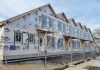
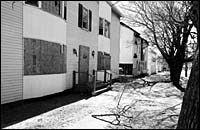
The plan is to tear down 100 units of low income housing known as Watuppa Heights and replace it with 26 single-family homes targeted for low to moderate income residents. Legislation filed at the Massachusetts State House seeking approval for the proposal is expected to come up for hearing in early April.
"There is no doubt that private home ownership is a stabilizing factor for the community," said Rep. Robert Correia, a Fall River Democrat who sponsored the House version of the bill. "These homes will be for people who are working hard, and would not normally have the opportunity to own a home. I think that they deserve that."
But some housing advocates fear that if Fall River gets the necessary approval to tear down the units, then a new precedent will be set for the state.
"We certainly understand the issue that they are dealing with in Fall River and some other cities in Massachusetts who have historically provided more affordable housing then there surrounding suburbs. But we don’t think that tearing down public housing is the issue," said Aaron Goinstein, executive director of the Citizens’ Housing and Planning Association, a non-profit housing group based in Boston. "The needs are great and by tearing down this housing they will be providing less opportunity for residents of Fall River and it will in no way change the dynamic that already exists."
It’s a view A. John D’Ambrosio, executive director of the Fall River Housing Authority, doesn’t necessarily agree with.
"I don’t think we are in a position to say what would happen in the rest of the state except to say that at the Fall River Housing Authority our mission and objective is to provide housing for the city of Fall River," he said. "So by tearing down these 100 units, we are not going to affect that. If we were supposed to be the housing authority for the Commonwealth of Massachusetts, then that’s a whole other matter."
Massachusetts is one of only two states in the country that provides state financing for housing, while in most states, including Rhode Island, public housing is funded through the federal government. And while the state has historically been a leader in affordable housing, Goinstein said in recent years, the funding levels have dropped.
"Public housing isn’t a popular program," he said. "It’s the toughest one to defend at the State House; therefore, some of the (housing) developments are in need of substantial repairs and unfortunately the state hasn’t provided adequate funding. The result is that they are becoming targets."
The problem D’Am-brosio said is that Fall River is bearing much of the state’s burden when it comes to affordable housing.
"We are a revolving door, and have been for several years now," he said. "We have become a transitional housing program. Because there isn’t enough housing in other communities, people come here. But as soon as a space opens up in their former community, they go back. The strain that it puts on this community is absolutely incredible."
Correia agreed.
"People are being uprooted and pulled from other communities and sent to Fall River," he said. "That’s a statewide issue that needs to be addressed. It shouldn’t just be Fall River’s problem; it’s unfair."
Goinstein doesn’t think it is.
"When you look at the 15 largest communities in Massachusetts, Fall River, in terms of the amount of affordable housing, is 10 out of 15," he said. "They don’t have a strong argument that they are the only ones handling this issue. Fortunately the other cities that have this problem aren’t saying that they are going to do more. Things like this have consequences."
And while Correia isn’t sure how the bill will fair this year in the legislature, he said it’s definitely not an issue that is going to go away.
"The inequity of putting poor people in certain areas of the state is unfair in terms of geographies, as well as the human factor," he said. "It doesn’t allow these people a chance for success. Right now they are moving lower income people to Fall River and not moving the services necessary to support them. Fall River is doing its fair share, now we need to force the rest of the state to do its fair share."