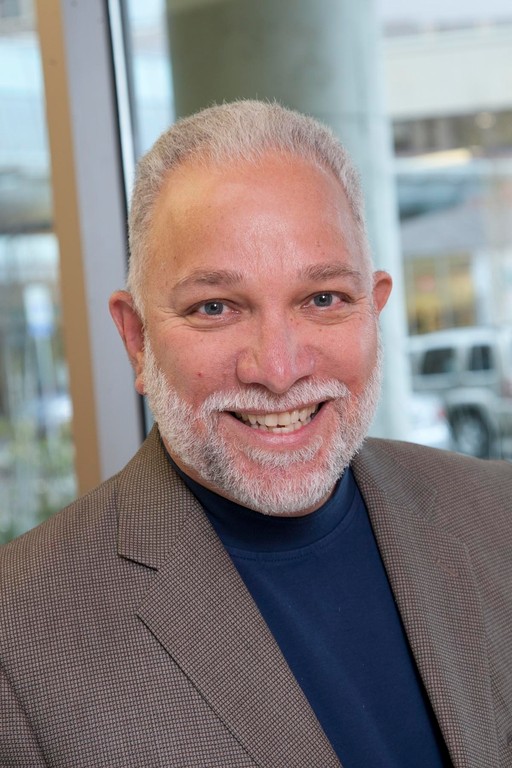
Dr. Pablo Rodriguez, is an outspoken advocate for affordable, quality community health care who often wears his heart on his sleeve He is also the CEO of a successful medical practice, Women’s Care, helping to deliver about 1,500 babies a year. His firm’s motto is: Women’s Care, where the community is born.”
He is an associate chair for community relationships in the Department of Obstetrics and Gynecology at Women & Infants Hospital, and a clinical associate professor at the Warren Alpert Medical School at Brown University.
Beyond Cash Donations: How New Forms of Giving Are Transforming Not-for-Profit Accounting
Evolving Funding Landscape for Not-for-Profits Not-for-profit organizations are being asked to do more with less,…
Learn More
His accomplishments – including serving as chair of The Rhode Island Foundation – have not dimmed his enthusiasm for community involvement. Currently, he is the regular host of “Hablemos” and “Nuestra Salud” on Latino Public Radio, where he also serves as chairman and CEO.
Rodriguez was one of the featured speakers at the groundbreaking on July 18 in Pawtucket for a new $6.7 million Blackstone Valley Community Health Care facility. Providence Business News asked Rodriguez to share his views about the current landscape for health care in Rhode Island.
PBN: When you spoke at the recent groundbreaking for the new Blackstone Valley Community Health Care facility, you called the community health care center a “center for justice and justice fighters.” Can you explain what you meant by that?
RODRIGUEZ: The Rev. Martin Luther King Jr., once said, “The greatest injustice is injustice in health.” Blackstone Valley Community Health Care has been providing health care for the disenfranchised for years and by virtue of this mission they are a center for justice. Also, their case management tries to address the social determinants of health that are recognized as the biggest source of health disparities.
PBN: The model at Blackstone Valley Community Health Care – the patient-centered medical home – was described as the future model for American health care delivery. What makes it such a good model?
RODRIGUEZ: The medical home model tries to destroy the current uncoordinated system of silos that has the patient running between providers and specialists, between the primary care provider and the ER, with its resulting inefficiencies and duplication. Costs will be contained as we increase the quality of the care received when everyone involved with the care of the patient is on the same page. This page is now electronic, thereby allowing for immediate access to all the information necessary for making medical decisions.
PBN: Many have warned of a serious shortage of primary care physicians in the next few years. What do you think can be done to improve the situation?
RODRIGUEZ: There is little doubt about the shortage. Our current reimbursement system favors reimbursement for procedures and episodes of care as opposed to results, which favors specialists over primary care providers. By emphasizing coordination, efficiency and evidence-based care that produces good outcomes, we might make a dent on the shortage. Also, the increasing use of non-physician providers to help in the coordination and day-to-day management of patients will allow physicians to handle greater caseload without compromising quality.
PBN: As the CEO of a small business, Women’s Care in Pawtucket, you have chosen to continue be active in the community. How can other CEOs become more involved? Why is it important for them to do so?
RODRIGUEZ: Community involvement is not only good for the soul, it is good business. I began my practice 25 years ago with one employee and a two-room office. Today Women’s Care is one of the largest providers of reproductive health care in the state, delivering around 1,500 babies a year, five office sites and prospects for even greater growth.
The best advertisement that any service business can have is to show you care and that your concerns extend beyond making a profit. Helping to grow prosperity and justice in the community also helps grow your own prosperity. Our motto is: Women’s Care, where the community is born.
PBN: What do you see as the most important priorities for health care in Rhode Island, moving forward?
RODRIGUEZ: We have to seize this moment in history to develop a system of care in Rhode Island that could serve as a model for the rest of the country. We must take advantage of our size and our collective commitment to embrace health care reform and place incentives to greater coordination, electronic health records and incentives on achieving better outcomes. Our R.I. Healthcare Reform Commission, led by Lt. Gov. Elizabeth H. Roberts, is well on its way to help achieve this goal.