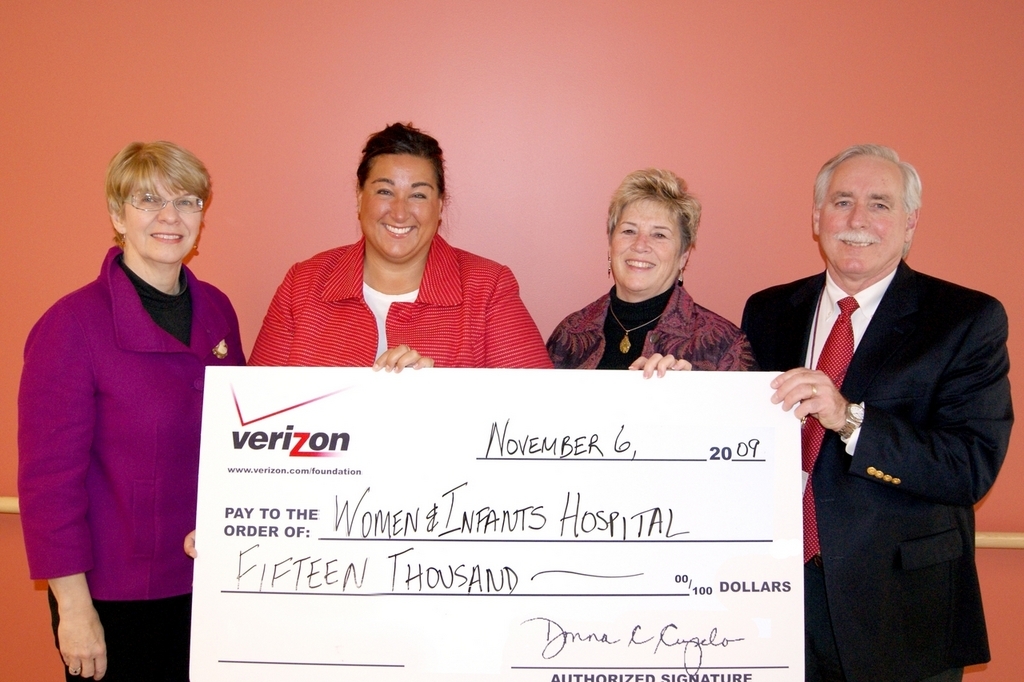
Women & Infants Hospital has received a $15,000 grant from the Verizon Foundation to set up a wireless bar code system for drug administration, so every dose a patient gets is first verified by scanning the drug, the patient’s ID bracelet and the clinician’s badge.
The system, which is part of the Cerner suite of clinical applications in use at the hospital, is expected to improve patient safety and prevent errors. Janet L. Schipper, director of clinical informatics and technology, explained how it will work.
PBN: How does Women & Infants currently dispense medications in inpatient settings?
SCHIPPER: Women & Infants currently uses Pyxis medication dispensing machines. These are filled by the pharmacy when they receive doctors’ orders for their patients. The nurses access the Pyxis machine through a password-protected process. They use the physician order sheet to compare what is needed, and they remove the medication.
Beyond Cash Donations: How New Forms of Giving Are Transforming Not-for-Profit Accounting
Evolving Funding Landscape for Not-for-Profits Not-for-profit organizations are being asked to do more with less,…
Learn More
PBN: How will the new medication verification system work?
SCHIPPER: The patient ID band is [already] printed with a bar code that properly identifies each patient. The important change is that the medication will have a bar code on it when it’s dispensed by the pharmacy. The nurse retrieves it from the Pyxis machine as she does now. The added safeguard is that a computer is brought into the patient room, and the nurse scans the bracelet … [and] brings up the patient’s chart up on the computer screen. The nurse scans the medication, and it highlights the medication on the screen … and confirms that the correct patient is getting the correct drug, at the correct dose, at the correct time, via the correct route. If [anything] is incorrect, a red warning box flashes across the screen.
PBN: What are some of the expected benefits from this change?
SCHIPPER: Our current method is still subject to human error. For instance, if the nurse retrieves the correct dose for Mrs. Smith in Room 4123 and walks to her room to administer it to her, she could be interrupted by a patient call or another nurse or physician with a question. When she resumes her journey, she could turn into 4121 and give the medication to that patient. Thankfully, this rarely happens at Women & Infants, but the potential is still there. The bar coding and scanning would prevent that from ever happening.
PBN: Are you at all concerned about potential pitfalls, such as if a physician puts in an erroneous order, but the system doesn’t flag it? Is there still a role for humans in making judgments and taking a proactive role in ensuring medication safety?
SCHIPPER: Women & Infants is instituting computerized provider order entry this June. Providers enter medication orders into Cerner, and they are transmitted directly to the pharmacy. Registered pharmacists review every medication before they “verify” and dispense it. The pharmacy computer system checks every drug prescribed against the patient’s allergies (which are recorded in the system) and against any possible drug-to-drug interactions. [It also checks] that the dose is in the correct therapeutic range, and that it is prescribed to be administered via the correct route. The system has the capability to check certain drugs against laboratory values that are pertinent to a specific drug, too. While the computer system runs through all these checks, a pharmacist must still OK the drug, so there is human interaction with the prescribing.
PBN: Rhode Island Hospital has used a system like this for some time. Has Women & Infants looked at their experiences, or those of other hospitals, in preparing for this?
SCHIPPER: Information system projects are always run with a multidisciplinary team of professionals. There are IT analysts, software specialists (many of whom have had prior experience at other facilities), nursing, medical staff, pharmacy, laboratory, diagnostic imaging, and project managers who develop project plans for each application that we have installed at Women & Infants and Care New England over the past eight years. We also make full use of our vendor, Cerner, and the expertise that they have with their product.