
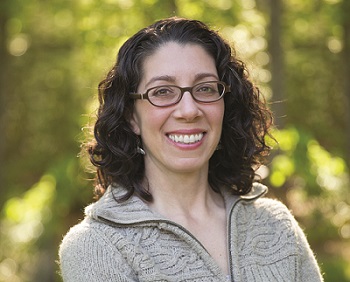
Jeanine Silversmith is the executive director of the Rhode Island Environmental Education Association. The Providence-based nonprofit is a collaborative network of organizations and professionals promoting environmental education to children and adults in the state.
Silversmith spoke with Providence Business News about how the association was impacted by the COVID-19 pandemic, how it had adjusted and what does the future hold for environmental education locally.
Building a Strong Data Foundation in the Age of AI
Artificial intelligence (AI) has become a key priority in the boardroom and across management —…
Learn More
PBN: How has the association been impacted by the pandemic?
SILVERSMITH: We’re a membership association, so our strength and power is bringing people together. Just the simple fact that we all can’t be together just changed how we did all of our programming. It’s not only RIEEA that had to do that, our member organizations had to do the same thing.
PBN: How did the delivery of environmental education to students change?
SILVERSMITH: We had to shift completely to virtual programming, and we have since March 13. We have done no in-person programming. For our member organizations, they had to switch to either recorded programs that were supplied to schools and youth groups, or they had to limit the number of people at a given time that was part of a programming.
The Audubon Society of Rhode Island, instead of having field experiences for school groups, they recorded their educators out on their properties teaching about natural history or birds, whatever the school wanted, and supply it to teachers to play for students.
For adults, I know that programming has been done virtually, such as how to increase the bird population in your backyard, and Norman Bird Sanctuary [in Middletown] did that.
PBN: Are some of the changes to education delivery expected to be permanent?
SILVERSMITH: The beauty of environmental education is we get people outside. There’s so many benefits to being outside. We all love to be outside and we share that love with people, but we know those benefits are important – physical health, emotional health and mental health are all improved with being outside.
Environmental literacy also increases while being outside. I don’t think any one of us wants to stay completely virtual after we go back to normal. I do think many organizations realize that they can have this broader impact in Rhode Island by offering some of those virtual programs to students and to adults. It will depend on the organizations and how successful it’s been, and how much they want to broaden their program offerings.
RIEEA’s position has always been that we bring people together and we have such a tiny state, and we can all meet. We did much of our work in person, but we’re learning that a lot more people are involved in having these virtual offerings. I think we will definitely have a combination of virtual and in-person learning after COVID.
PBN: What is your hope for the association once the pandemic is over?
SILVERSMITH: The hope, as always, is that we – the community of environmental educators – can improve our ability to get people outside and learning about the environment. If there’s a virtual program that can help with that, great, let’s do it.
PBN: What challenges does the association face in getting to that recovery?
SILVERSMITH: I worry a lot about the solvency of nonprofit organizations, generally speaking. But, in this community of environmental education, many of our organizations are really place-based, such as [Roger Williams Park Zoo]. Its revenue incredibly depends so much on people visiting the zoo. During COVID, it’s really impacted. So, I worry about all the organizations surviving through this time.
I think they say 70% of all donations [to nonprofits] come from individual people, not just grants. So, as people are more and more strapped for cash with loss of jobs, I worry about what’s going to happen in the next six months or so and if any of our member organizations or nonprofits are going to fold or be so far behind in their budget that they won’t be able to continue with this programming.
From what I’ve seen, the Rhode Island community has done an amazing job of supporting the nonprofits I work with, and RIEEA feels stable going into 2021. I wonder what we’re going to look like next summer and how much capacity we’ll have to do this work.
James Bessette is the PBN special projects editor, and also covers the nonprofit and education sectors. You may reach him at Bessette@PBN.com. You may also follow him on Twitter at @James_Bessette.



