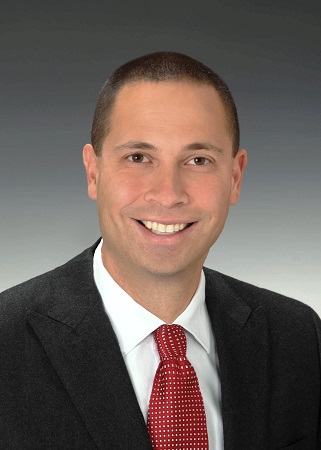
Tom Fitzgerald is senior vice president and director of the franchise banking division for Bank Rhode Island. He has more than 20 years of banking experience and specializes in franchise financing. He has a Master of Business Administration from Providence College and a bachelor’s degree from Rhode Island College.
PBN: What is franchise banking and how do you as head of BankRI’s franchise banking division work to grow and maintain that business line?
Selling Luxury Real Estate Requires More Than Exposure
By Emilio DiSpirito IV License Partner | Private Office Advisor Engel & Völkers Oceanside www.DiSpiritoteam.com…
Learn More
FITZGERALD: The BankRI Franchise Lending Group offers an array of financial services that cater specifically to the needs of franchisees. Although there are some similarities to more-traditional banking services, franchise financing is a unique part of BankRI that focuses predominantly on the quick-service restaurant industry.
I’ve spent nearly 20 years focused on franchise financing and joined BankRI a little more than a decade ago to build the franchise group. BankRI has always been known for its relationship banking model, and relationships are often a differentiator in the franchise world.
We are now one of the largest financers of Dunkin’ franchises in the country. We take a commonsense approach to growing our business line: be consistent, responsive and care. This has allowed us to develop deep, meaningful relationships.
PBN: How is franchise banking different than other commercial lines of banking? How is it similar?
FITZGERALD: The major difference is understanding the franchisor/franchisee relationship. Unlike other business models, franchisees must adhere to strict operating standards and have a contractual agreement with the franchisor. That contract, among other things, stipulates having to maintain a specific level of operations, including mandated remodeling and equipment upgrades. A typical business may make enhancements to their operations, but franchisees are obligated to do so.
Lending to franchisees is also unique in that collateral is mostly the enterprise value of the brand versus hard assets such as a building or equipment. In light of this, it’s important for BankRI to understand the value of a franchise and closely monitor the market factors that impact its value. There also are similarities to other commercial lines of banking, in that loan structures can be similar in both term and amortization.
PBN: BankRI recently hired a senior vice president for its franchise banking division as part of plans to grow the division. Tell me more about those growth plans.
FITZGERALD: BankRI recently hired Craig McKenzie as a senior vice president relationship manager in an effort to expand the franchise lending group. Craig brings a unique skill set to the position having spent numerous years in both the franchise and banking industries. We anticipate Craig utilizing those talents to expand BankRI’s Franchise Lending Group within our core Dunkin’ portfolio while expanding into other franchise concepts with similar characteristics.
We maintain a high level of expertise in the Dunkin’ business model and, as a result, built a portfolio centered on experienced, quality Dunkin’ franchisees with strong financial profiles. We believe that expertise is highly transferable to certain franchises, which will further expand our Franchise Lending Group portfolio while diversifying into other concepts. With the addition of Craig, BankRI is well positioned to execute on our expansion plan.
PBN: How has the pandemic and subsequent market volatility impacted commercial franchising activity in the local market? How do you expect that to evolve in the year ahead?
FITZGERALD: The Franchise Lending Group’s portfolio was strongly resilient during the pandemic due to a combination of its recognizable brands, loyal customer base and sophisticated franchisees. Management temporarily closed stores and reduced hours at others to better control staffing and food costs.
Additionally, BankRI was quick to facilitate Paycheck Protection Program funding, as the Franchise Lending Group worked tirelessly to ensure timely PPP funding, helping to ease the strain of uncertainty at the outset of the pandemic. The portfolio quickly stabilized and has since moved into a consolidation mode as our larger, well-capitalized franchisees purchased smaller operators, creating a flow of financing opportunities.
In the case of Dunkin’, we will continue to see financing opportunities from brand-mandated store remodels and new location construction.
PBN: What are the biggest challenges to the franchise banking industry, for BankRI and in general?
FITZGERALD: The biggest challenges facing the franchise industry are not all that different from the issues facing other businesses, although they can be exacerbated as a result of a franchisee’s multi-unit concept.
Economic challenges continue with labor shortages, particularly at the store level, and volatility with supply chain and commodities pricing fluctuation. For franchisees to weather these storms, it’s imperative they lean on a trusted financial adviser to help them navigate through the complexities of the current market.
At BankRI, we are tasked with building a customized financial package, which allows the franchisees to focus on running their business.
Nancy Lavin is a PBN staff writer. You may reach her at Lavin@PBN.com.