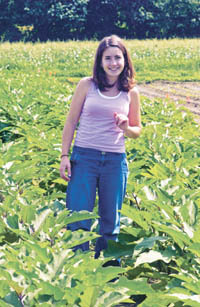
Whitney O’Hanian has joined the University of Rhode Island in Kingston as a sustainable agriculture specialist. For the past two years, she has worked at the Rhode Island Community Food Bank. In her new role, O’Hanian is project manager of an initiative aimed at helping vegetable and forage farmers.
PBN: What are the main goals of your new project?
O’HANIAN: Through collaboration with the R.I. Department of Environmental Management Division of Agriculture and the R.I. Center for Agriculture, Promotion and Education we are working to reconnect URI with the agricultural community by providing technical production support and developing relationships with farmers to better understand their needs.
Rhode Island's Market Has Changed. Developers, Builders, Investors and Sellers Must Change With It.
By Emilio DiSpirito IV License Partner | Engel & Völkers Oceanside Leader | The DiSpirito…
Learn More
PBN: Has Rhode Island done enough to support farmers?
O’HANIAN: A number of public and private agencies in Rhode Island have historically supported our farmers. Today there are people in the agricultural community providing assistance with marketing, farmland conservation, environmental stewardship, organic certification, farm viability and diversification, agritourism, agricultural promotion, etc.
PBN: What is the state of agriculture in Rhode Island?
O’HANIAN: Rhode Island’s farms are interesting and complex small businesses. As such they have to deal with all sorts of issues from development pressure to drought. However, in the last 10 years there has been a surge in community support for locally raised produce, and that is good news for our farmers, particularly because the farmers in this state are masters at direct marketing.
PBN: Is there a growing interest in preserving farmland?
O’HANIAN: Rhode Islanders are beginning to look at their role in preserving farms. Everyone has a responsibility to help sustain agriculture, because without it there are significant environmental, cultural and economic losses.