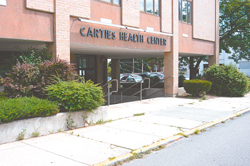
Carties Health Center at 21 Lincoln Ave. in Central Falls operated for more
than 20 years before it was foreclosed on in September.
With an enormous electric bill and an employee strike it couldn’t recover from, the 213-room, 74,048-square-foot nursing home facility went into foreclosure and is now up for sale by lender GMAC for $3.5 million, Central Falls Tax Assessor Wendell Wilkie said.
A specialty commercial property like Carties probably won’t draw many investors and is likely to sell lower than its actual value, said Todd Beitler, a foreclosure expert, industry consultant and founder of the Real Estate Library, a real estate publications company in Boca Raton, Fla.
Beyond Cash Donations: How New Forms of Giving Are Transforming Not-for-Profit Accounting
Evolving Funding Landscape for Not-for-Profits Not-for-profit organizations are being asked to do more with less,…
Learn More
Buying a foreclosed property can be risky depending on which phase of the process the property is bought at, but it can be a wise investment.
There are three ways to go about buying foreclosed property, each with different risk and reward levels, Beitler said.
When a property owner defaults on a loan by not paying the lender, the lender starts sending out notices about the default. If the issue is not resolved, a lender files a notice of foreclosure.
Pre-foreclosure investors look for these public records and reach out to owners to try and retrieve the property before it goes up for auction. Pre-foreclosure investments offer medium reward at medium risk, he said.
“During the pre-foreclosure period, (property) owners get inundated with phone calls and bright pink and yellow slips from investors that want to ‘save’ their property. There is a good amount of controversy over this because of predatory investors,” said Beitler. “It can be hard because the owners aren’t usually in a good mood at this point and can be hard to get a hold of, but investors can make a decent amount off pre-foreclosures.”
If the property owner does not negotiate with a lender or get help from an investor, the property goes to auction. Buying at this time is extremely risky but holds opportunity for the highest reward, Beitler said.
“The 3,100 some county courthouses in the country all follow different rules about buying property at auction. Typically, you must put down 5, 10, or 15 percent of what you are paying and then you have to pay in full that day. (Courts) don’t let you shop around for a mortgage, and without a title or insurance, it’s impossible to get a mortgage,” he said. “Experienced investors buy at auction when they know the type of property. There is a lot of guesswork involved.”
When a property is bought at auction, all the previous owners’ problems and debts are also inherited, and because property inspections aren’t normally permitted, cracked foundations, damaged roofs and leaky pipes are a costly possibility, he said.
“There are so many horror stories from buying at auctions,” he said. “The goal is to acquire a property at less than 65 percent of its value because there could be unseen problems. You have to be shrewd, have the cash and the smarts to buy at auction.”
When the property is publicly auctioned off at the highest bidder, the process moves very quickly and bidders compete against the lender and other investors.
About 80 percent of the time, the lender that foreclosed on the property is the winning bidder, Beitler said.
“Lawyers are always at auctions bidding for the lenders. If a property is that bad that the lender can take it as a loss, don’t bid on it,” he said.
When a lender buys a property it foreclosed on, they try to get rid of it as soon as possible to avoid having the blemish of a non-active loan on record – which the Federal Deposit Insurance Commission does not like to see on an asset list, Beitler said. Investing in a property the lender has bought – known as Real Estate Owned – offers low reward but also the lowest risk, he said.
Lenders usually work with real estate brokers to sell foreclosures at market value, though the property prices are negotiable, he said.
“Not all foreclosures are opportunities, but if you walk through the property and see problems with A, B, and C, and list them with photos, you can justify a lower offer,” he said.
Government foreclosures
When the Internal Revenue Service seizes a property, it auctions the property off starting at a value determined by professional appraisers.
Bidders can get a “deal” on one of these properties depending on how low the bidding stays, IRS spokesperson Peggy Riley said.
Housing and Urban Development, Veteran’s Affairs, the Small Business Administration, and the FDIC make up about 70 percent of all foreclosed properties for sale, foreclosure specialist Raymond Dunlevy of Dunlevy Realty in Jamestown said.
“Finding a foreclosed property requires a lot of research, and you have to be willing to look on the Web site every day,” said Dunlevy, who suggests using a real estate broker to keep risk low.
The U.S. SBA acquires property – including commercial property, single-family homes, vacant land and farms to machinery, equipment, furniture, fixtures and inventory – and sells it at market value after foreclosure.
“We try to sell properties at market value, but there is a stigma about buying foreclosed property that makes it difficult to sell. People call and expect that since a property is foreclosed, they can automatically buy it at low cost,” said Amy Basset, an SBA economic development specialist of the Boston regional office.
Information on government foreclosures is available for free on the government
Web site, www.firstgov.gov, despite the numerous Web sites that offer the same
information for a monthly subscription fee.