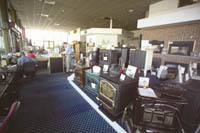
Randy Titsworth, managing partner of the Fireplace Showcase in Seekonk, has been in the insulation distribution business for nearly 30 years. He knows how to heat a house – and keep the warmth in.
With energy prices soaring, consumers are looking to wood and pellet stoves to supplement their gas and oil heat, said Titsworth. He has sold about 100 pellet stoves in just the past month.
Beyond Cash Donations: How New Forms of Giving Are Transforming Not-for-Profit Accounting
Evolving Funding Landscape for Not-for-Profits Not-for-profit organizations are being asked to do more with less,…
Learn More
However, new technology in gas, called direct vent systems, may still provide the most cost-effective, efficient and user-friendly source of heat available, according to Titsworth.
A direct vent gas fireplace allows the flames to burn in a sealed combustion firebox without contact with the room air. The system draws outside air to the fire for combustion using a vent system. The room air is heated as it circulates through the burner system and is emitted through the top and the stove face of the unit.
In contrast, a conventional wood-burning fireplace will force most of the heat up the chimney, said Titsworth. A traditional fireplace will use only about 20 percent of the heat produced while a direct vent system will work at about an 80 percent efficiency rate, he said.
Titsworth’s career dates back to the late 1970s with a newspaper-recycling business that produced cellulose insulation. In the early 1980s, he became a wholesale distributor of insulation – a $12-million business that was sold in 2000.
In 1999, he formed Fire-Mart LLC, a distributor of gas fireplaces and hearth products to builders and construction companies in the Northeast.
Builders were paying between $8,000 to $10,000 to build a masonry fireplace, said Titsworth. A direct vent fireplace could be sold for one-third of the cost, he said.
“Contractors were starting to look toward these gas fireplaces as a viable option because of the expense and inefficiency of masonry fireplaces,” he said.
In 2002, he opened a retail outlet to sell to the public.
The Fireplace Showcase encompasses more than 40,000 square feet of space including 4,000 feet of showroom with about 25 burning displays at the former Showcase Cinema site.
Titsworth reported a 100 percent increase in September sales compared to the same month last year.
“Direct vent is the efficient way to space heat,” he said.
In the short term, gas may not seem like the best energy investment because of the cost, said Titsworth. But, like other kinds of gas, the price of natural gas should drop as well, he said.
Looking at the whole picture, the gas unit is relatively maintenance-free and does not require the constant upkeep of a conventional wood fireplace or a pellet stove, he said. A gas unit can last upward of 10 years, he said.
Sixty percent of the business is from homeowners while the other 40 percent is work with contractors, he said. Customers run the gamut from those building a new house to customers looking to purchase a gas insert fireplace for their existing masonry unit, he said.
There are also wireless programmable thermostats that allow you to design your heating around your lifestyle, he said.
The direct vent system is also more efficient than a conventional gas furnace where heat is lost in the transfer, he said.
Gas fireplaces have changed their appearance and classification over the last five years to make them more appealing to customers, said Titsworth.
Older versions of gas fireplaces used tubes that gave the effect of burning logs, said Titsworth. New technology developed flat pan burners that allow for different-size flames and gives the appearance of a burning base of coals, making it look more realistic, he said. New screen fronts further enhanced the appearance of the sealed unit, he said.
Gas fireplaces are now classified as heater-rated appliances, said Titsworth – this allowed people to buy a heating appliance based on its BTU output compared to the amount of space that must be heated, he said.
“The space heating concept will save you overall dollars,” said Titsworth.