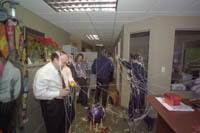
Workplace fun does not have to be an oxymoron; just ask Gem Plumbing and Heating about “plork.”
Developed as part of Making People Smile, a strategic plan to boost workplace morale, plork – short for “play at work” – started last June and involves about two short “fun events” each week, except for a monthlong hiatus around the holidays.
The activities tend to be non-traditional, President Anthony P. Gemma said, and involve “totally whacked-out” fun. They’ve included bowling for plungers, a prize wheel in which employees get rewards for performance or attendance, and lunch provided by the company.
Seifert Systems Invests in Energy Efficiency to Strengthen Operations
For manufacturers, energy is more than just another operating expense. It plays a critical role…
Learn More
There are prizes as well as a “plork fairy” – a Gem employee injecting excitement and sprinkling fairy dust throughout the office.
“[These activities] throughout the year keep morale up,” said Gemma. “They also relieve stress and are inexpensive.”
The events are all planned by company executives and are kept secret from the staff until moments before the event actually takes place. The only restriction on activities is that they must not exceed 10 to 15 minutes, said Rebecca Gamage, director of marketing.
The biggest event so far was a silly-string fight, Gamage said. About 100 cans of silly string were placed around the building, and when employees got their hands on them, “this building just exploded,” she said. “It was an absolute blast.”
When the program began, all employees got a “smile pack” with Playdoh, stress balls and plastic musical instruments, among other things. Before an event, employees are told which materials in the pack they will need for the activity, said Gamage.
In addition to their fun in the office, Gem organizes events each year that take employees to different destinations to build camaraderie and morale. Company officials have led trips to Loudon, N.H., for NASCAR racing, shopping trips to New York, golf outings and picnics.
This year, in addition to the traditional survey, employees will be asked to draw a picture about how they feel about the company. “It should be very interesting to see what we get back,” said Gamage.
For Gem and all companies involved in this kind of program, the goal is to have happy, productive and valuable employees. But not all employers put the necessary effort into fostering these feelings, expert say.
Ann Fry, dean of fun at Humor University, a virtual school based in Austin, Texas, that helps companies incorporate fun into their work, said people who feel appreciated work harder.
Fry has come up with 139 ways to “lighten up the workplace,” including such things as giving a candy bar with an employee’s paycheck, recognizing employees who go above and beyond the call of duty, or allowing the staff to bring their children to work one day.
The No. 1 reason employees quit their job is because they are unhappy or feel underappreciated by their boss, said Fry.
Over the last 10 years, but even more so after the Sept. 11, 2001, attacks, employers have begun to realize that the workplace should be based around employees, she said.
An employer can conduct a survey to gauge how employees feel about working at the company and form a “fun committee” based on those results to incorporate different activities as simple as a hat day to improve company morale, said Fry.
Richard Highsmith, an instructor at The Leader’s Institute in Orlando, said via e-mail that people work where they are happiest.
“If an employer can create an atmosphere that fosters creativity, commitment and enjoyment, the company will benefit in lower turnover and higher productivity,” he said.