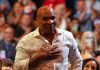
Name: Gerard M. Martineau
Age: 40
Position: House Majority Leader (D-Woonsocket); Owner, The Upland Group, a manufacturer’s representative organization
Backround: First elected to the General Assembly in 1986; In November 1998 House Democrats elected him Majority Leader, replacing George D. Caruolo, who did not seek reelection.
Education: Bachelor’s degree, St. Anselm College
Family: Married; two sons
Residence: Woonsocket
PBN: As chairman of the House Committee on Corporations you heard debate on the Non-Profit Hospital Sale Act, which later became law. What is the purpose of that law?
MARTINEAU: The Act sets up a vehicle by which a for-profit hospital coming into the state needs to identify its interest and outline its plans and demonstrate to the attorney general first, and health department second, what the issues are, what the nature of the merger is, who the principals are How does it best serve the community – and does it serve the community?
Beyond Cash Donations: How New Forms of Giving Are Transforming Not-for-Profit Accounting
Evolving Funding Landscape for Not-for-Profits Not-for-profit organizations are being asked to do more with less,…
Learn More
Did this law deter Columbia HCA in its attempt to acquire Roger Williams Medical Center?
Clearly it did. That was a proposal that was substantially authored by my predecessor, Majority Leader (George) Caruolo, and I think that the membership of the House and the Senate agreed and identified it as a real need for us to get our arms around what was going on. And to have a vehicle by which we could identify the pluses and minuses of a for-profit and to identify whether we ought to be going down that road.
Hundreds of Lifespan employees lost their jobs in recent weeks. We have heard of layoffs – to a lesser degree – at other health care organizations. At what point is the condition of the state’s health care system so important to the state’s overall economy that lawmakers need to expand their role?
We view that role as policy. To direct public policy and establish a framework by which mergers and acquisitions — if there are going to be some — take place.
Talk about that role.
The Hospital Conversion Act took care of hospital conversions. There are now HMO issues. There is Blue Cross, and Anthem, out of Indiana that is looking at them. There is a player in Florida that is interested. We need to set policy and let the market dictate what happens. I do not think we should be unduly involved, just as we did not think it was appropriate to be involved relative to the dispute at Women & Infants. I don’t think we have any business establishing the basis by which a lock-out is appropriate or a strike is appropriate. We need to have a policy in place and let the bargaining units take care of the collective bargaining. We ought not step into the middle of that. It’s the same with the hospitals. We shouldn’t be determining which hospitals merge with others. If they qualify and go through the process and get by the attorney general and the health department – and in the case of HMOs its the AG and the Department of Business Regulation – then it ought to be appropriate. As long as the safeguards were in place.
What is your stance on a proposal to increase the minimum wage?
The committee is going to hear testimony. They’re looking to bump up from $6.15 to $6.65 an hour. There hasn’t been any change in two or three years. There has been some sense that maybe we ought to wait for Massachusetts, which is also hearing legislation. I think we agree more and more that it is those borders between Rhode Island and Massachusetts where we really compete. There is also something pending federally regarding a minimum wage increase. Whether we like to admit it or not, these jobs are going elsewhere. I think most employers in the state would understand that $6.65 is not an unreasonable minimum wage. The testimony and the discussion has yet to be heard. It will be interesting to see where that goes and how strenuous the Chamber of Commerce is in opposition.
So you would support an increase in the minimum wage?
It’s something we ought to evaluate and look at closely. I don’t think it’s an unreasonable proposal.
How about bimonthly pay, a proposal that would allow employers to pay hourly workers every other week, rather than weekly as they are required to do?
The labor community is saying that for some of the folks on the lower end of the scale it is difficult to manage finances week to week. And frankly, I share some of that concern. We need to balance that with the business community’s interest in the efficiencies of having half as many checks cut.
NBC Sports and the Gravity Games arrive this fall. You were among the players to help bring the games here. Can you put into some kind of context. Just how big is this event for Rhode Island?
It’s about $100 million big. First of all, John Mousseau of the Rhode Island Sports Council has done a great job. Just putting us into the mix. The Gravity Games are huge. They have an enormous amount of money. Petersen Publications is a huge conglomerate. They do about 100 of the biggest sports publications. They’re going to market it. They looked at a lot of cities before choosing Providence. They eliminated a bunch and then it came down to Denver, San Diego and us.
Did you think you were going to get the Games after you, Mousseau and U.S. Rep. Patrick J. Kennedy met with NBC officials in New York?
No. We could tell there was interest and we had given a good presentation. We told a great story. Dick Ebersol told us; ‘Passion counts here. And we can see that.’ We told them that they would be staged here. That in San Diego or Denver, maybe they would be an also-ran. That in Providence they would be the show. They could see that the political will was here and that there was private sector money.
Do you find that in Rhode Island, people can step aside from political affiliations and work to reach consensus. Tom Ryan, of CVS, described such a scenario in terms of his effort to get legislative leaders to agree on the proposal to build a convocation center/sports arena at URI. Are you seeing a willingness on the part of Rhode Island’s business and political leaders to work together?
That is the case with a lot of folks and he (Ryan) is one of them. Dean Holt, of Fleet, is another. There are three or four major business leaders in Rhode Island who have really stepped up to the plate. Tom Ryan has a real commitment to the community. There are other business leaders who are finding that unlike 10 years ago, there has been more of a connection. We always try to facilitate public/private partnerships. I can’t say enough now about that relationship between business and labor. It wasn’t that long ago that you got involved in a lot of turf issues.
There is a Democratic stampede toward the U.S. Senate seat being vacated by U.S. Sen. John Chafee. Whom are you supporting?
As you know, the name of our Speaker of the House (John Harwood) has been mentioned. He has been an effective leader of this Chamber and has done a wonderful job. So I think that if he chose And until I hear from him, I’ll reserve any substantive comment. As far as I know, he’s thinking about it. He would be a very effective leader. He’s been an effective leader here for six years. He was a leader before he became Speaker in this Chamber. He would be a great candidate, if he chooses.
That begs a question about someone else who has spent some time here at the State House, U.S. Congressman Robert Weygand. He is running for the U.S. Senate. Between the two of them, you would support Mr. Harwood?
The Speaker has been a very effective leader. Until I hear from him otherwise, I would certainly support him.
Has the Utility Restructuring Act of 1996 accomplished what you expected it would?
We predicted when the restructuring was first introduced — and we were going through the testimony and hearing from the companies – a reduction of costs of about 13, or 14 or 15 percent. That would have been a healthy return – a healthy reduction. What we have seen is about a 20 percent, with the NEES (New England Electric System) companies, and the soon-to-be-taken-over Eastern Utilities operation. More importantly, it has spurred a lot of projects. There is one in Tiverton, one in North Smithfield. There are a lot of gas-fired plants. The restructuring has encouraged outside investments. There is also a pipeline project with gas coming down from Canada, which ensures that into the future we will have a lot of very inexpensive and efficient gas piped in. There are a lot of interesting prospects for the future in terms of gas-fired, which is a lot cleaner than the oil and coal of the past. The restructuring has brought on an aggregation. Cities and towns are doing it. With the state, we are going to pass som
ething shortly that will allow us to exempt entities of state government, to let them aggregate and save money by buying power off the grid.