Amid all the heated political rhetoric over health care, one policy still enjoys near-unanimous bipartisan support – computerizing patient records. President Barack Obama has embraced the timeline set by his predecessor, President George W. Bush, of giving every American an electronic health record, or EHR, by 2014.
Obama backed his pledge with taxpayer money – lots of it. The economic stimulus package he signed in February included $19.5 billion for health information technology, most of which was directed to subsidizing the adoption of EHRs by doctors and hospitals.
Eight months after the law’s signing, though, physicians and the EHR industry are still waiting for Dr. David Blumenthal, Obama’s health IT adviser, to finish the regulations that will govern how the money gets distributed. The result has been a freeze in EHR adoption.
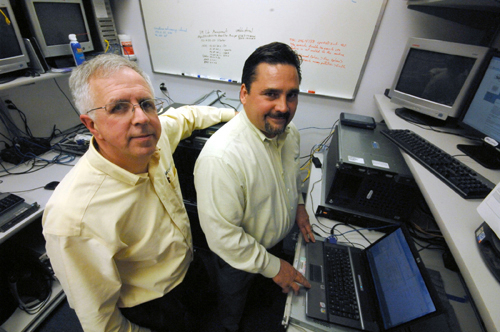
“It’s been sort of an anti-stimulus,” said Donald Nokes, president of NetCenergy LLC, a Warwick-based firm that assists doctors’ offices with installing and maintaining EHR systems. “In the long run, it’s a great stimulus. In the short run, they’ve basically stopped the investment cycle, because people are waiting to make certain that the investment they make is reimbursable.”
Under the stimulus program, known as HITECH, doctors can receive as much as $44,000 over five years starting in 2011 for adopting EHRs. Hospitals can receive a $2 million payment and higher reimbursements. Providers who have not installed a system by 2015 will be penalized.
The scale of the job is enormous. Government surveys have shown that just 17 percent of physicians and 9 percent of hospitals had installed EHRs as of last year. The main barrier cited is the expense – getting an EHR system up and running can cost an estimated $40,000 for a doctor and far more for a hospital.
The expected benefits of e-records go beyond just digitizing patients’ charts, said Laura Adams, president and CEO of the Rhode Island Quality Institute, a health care nonprofit. Used effectively, they could improve care, eliminate wasteful spending and help public health officials recognize trends, she said.
Dr. Jonathan Bertman, a family physician and Brown University medical professor, said AmazingCharts.com Inc., a North Kingstown-based company he founded in 2001 that sells a low-priced EHR system, saw its client signups drop from 60 to 70 a month to 30 after the stimulus bill passed. “Frankly, I think it’s kind of the calm before the storm,” he said.
The same thing happened at Polaris Management Inc., a physician-owned company in Cranston that has sold its own EHR system, EpiChart, to about 130 physicians in Rhode Island. But Noah Benedict, the company’s executive director, is not complaining. “It’s been incredible,” he said. “We’ve got doctors who’ve been on the fence … and when the stimulus came down, my phone started ringing off the hook.”
Deborah Hogan, project manager at Electronic Health Records Rhode Island, a nonprofit formed by a consortium of providers to sell the popular eClinicalWorks software locally, said her group has not seen a major decrease in purchases because eClinicalWorks is almost certain to meet federal requirements.
One concern voiced frequently is that with more than 300 EHR systems available, the stimulus money will be wasted on systems that are overpriced or ineffective.
The stimulus law also calls for the creation of “regional health IT extension centers,” local organizations that will assist with the transition to electronic records and ensure cooperation among providers. R.I. Medicaid Director Elena Nicolella is backing the Quality Institute’s effort to get itself certified as Rhode Island’s extension center. •