of Grow Smart Rhode Island.
Hoping to reenergize the brownfield effort in the state, Grow Smart Rhode Island is co-sponsoring a daylong conference Wednesday, February 7 to look at “How Rhode Island can do more.”
Presented in conjunction with Main Street Rhode Island, the conference is slated
to bring together a wide range of interest groups including, builders, lawmakers,
town and city planners, people from both the public and the private sectors. The
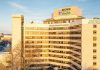
conference being held at the Radisson Airport Hotel in Warwick from 8:30 a.m.
to 3:30 p.m. is scheduled to include case studies, a series of policy recommendations,
and a keynote address by J. Christian Bollwage, mayor of Elizabeth, New Jersey,
where a variety of brownfield work has been done.
Beyond Cash Donations: How New Forms of Giving Are Transforming Not-for-Profit Accounting
Evolving Funding Landscape for Not-for-Profits Not-for-profit organizations are being asked to do more with less,…
Learn More
“This is a conference to examine how the state can improve its approach to redeveloping these areas,” said Scott Wolf, executive director of Grow Smart Rhode Island. “There is still some stigma surrounding the development of these properties.”
A brownfield, as defined by the federal Environmental Protection Agency, is an abandoned, idled, or underused industrial and commercial facility where expansion and redevelopment is complicated by real or perceived environmental contamination.
According to Wolf, it is estimated that the state has more than 300 brownfields, but he said one of the major problems is that no official count has been taken.
“These properties, though they may have some environmental obstacle, could be a real economic opportunity,” he said. “There are some regional inventories, and some towns have done their own inventories, but there isn’t a 39 cities and town inventory for the state of Rhode Island that I could reference.”
Another problem keeping parties from developing brownfields, Wolf said, is the issue of liability.
“There are definitely still some liability issues,” he said. “Some people still aren’t aware. For example, municipalities don’t have the same liability assurance that private developers can obtain. And getting insurance can be very complicated.”
According to Wolf, since local browfield policies were adopted in the mid-1990s,
little has been done to update or improve them — something he hopes can be accomplished
at the conference.
“I don’t want to create the idea that the state hasn’t done anything,” he said. “Our focus is how do we put in place new policies and new incentives to make it easier to develop these properties. We are hoping the conference will be a catalyst to promoting the state’s brownfield agenda.
The cost of the conference is $30 for non-profit and government organizations and $80 for private businesses. For more information call Grow Smart Rhode Island at 273-5711.