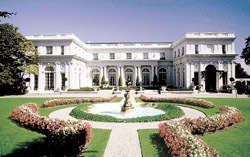
The history of the Pennsylvania coal moguls who built The Elms in Newport and
all the wonders of the mansion have been told and re-told for decades, but behind
the ornate fixtures and art, in the backstairs, other stories have slept.
Men and women tended the gardens, cooked the meals and laundered the linens of Mr. and Mrs. Edward Julius Berwind when they were at that summer home in the early 1900s, but their stories were never told until now.
Finding new angles of history of the 11 mansions in Newport is one of the ways the Preservation Society of Newport County is trying to recover from years of declining attendance.
Seifert Systems Invests in Energy Efficiency to Strengthen Operations
For manufacturers, energy is more than just another operating expense. It plays a critical role…
Learn More
“We had to scale back on our projects early last year to protect ourselves and to keep from laying people off, which we don’t like to do,” said Preservation Society of Newport County CEO Trudy Coxe. “The Museum of Fine Arts (Boston) – probably the richest museum in New England – had to lay off (23) people” this month.
The Preservation Society saw a 10 percent decline in mansion attendance during the past five years and predicts another “soft season,” but the Newport mansions – which rank in the top four in museum attendance in the region – isn’t doing as poorly as others.
The 50 largest museums in New England have experienced a 22 percent decline in admissions over the past five years and some are dramatically changing their game plans to attract visitors.
Some museums have resorted to hosting “speed-dating” events to raise revenue, and the New England Aquarium played “Star Wars Episode II: Attack of the Clones” at its Simons IMAX Theatre – “straying far from their mission,” Coxe told Preservation Society members at the group’s annual meeting June 17 at Rosecliff mansion.
“We do a lot of research to re-interpret the stories we tell, and we are looking at interesting ways of attracting patrons. Regardless of the challenges, though, we will not do anything to compromise our reputation. We’ll amp it up, but with dignity,” she said.
“The economy has been problematic. In the past two or three years, people have been conscious about their pennies. We got off to a bad start because of the war, people were canceling trips, and also the weather last year,” Coxe said.
Over the past year, the Preservation Society has changed the way it operates to tie the Gilded Age into the age of technology and attract new types of people. The group overhauled the Newport mansions Web site to make ticket sales, event information and gift store items available online, Armin Brand Allen, the preservation society president, said, reporting 25 million hits to the site last year.
Last month, the preservation society used the high price of gasoline to their advantage by offering anyone who presents a receipt from a gas station and buys at least two “Breakers-plus” tickets a $2 rebate, or a $5 rebate for two “five house” tickets. The Society reports 1,000 redemptions to date.
The Society is also open to making mansions available for new purposes, like this year’s “Newport in the Jazz Age” exhibit in the halls of Rosecliff. Audio tours of the mansions are being developed and different tour themes, shifting the focus from straight history to architecture, design, or, in the case of the Isaac Bell House, the process of historic restoration.
The Society started a family tour, where instead of explaining the life of Cornelius Vanderbilt II, who built The Breakers, or the Renaissance revival – terms that kids may not understand – the tours are interactive in age appropriate language, Coxe said.
“We’ll ask the children questions, like, ‘If you were one of the richest children in the world living in this house, what would you do,’” Coxe said. “We are using tour guides that enjoy working with children. A child’s enjoyment is most important to parents.”
The Society also introduced the Elms After Hours Tours on Friday nights this season, where guests tour the first floor of the house, are served wine and hors d’oeuvres on the terrace, and stroll through the sunken garden, simulating a summer party like those held at the mansion during the early 1900s, Coxe said.
Though the Society struggles to attract new patrons, ticket sales make up less than 50 percent of its budget. Corporate and individual donations, membership contributions, federal grants, annual events and outside rentals of the properties help keep the Preservation Society operating within its $14.5 million revised annual budget, Allen reports.
The Society, which achieved accreditation status with the American Association of Museums in fiscal year 2003, has been successful with raising revenues through fund raising.
“We raise money in creative ways from a number of other sources,” Allen said. “Fund raising is a key role for the staff and trustees in any organization, and last year … we were remarkably successful.”
Restoring the mansions and maintaining the 25,000 items in its collection
is a constant concern for the Society, which now faces electrical problems in
mansions, the deteriorating Green Animals Topiary Gardens, constant restorations
to paintings and antiques, and various infrastructure issues within the mansions.