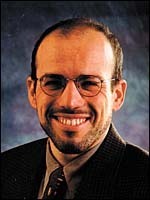
education director.
The first order of business for new Rhode Island Technology Council (RItech) Education Director Louis Soares will be to partner with area schools to create a new media academy.
RItech plans to model the academy, to be located in an urban community, on those established by Cisco Systems. Just three years after its inception, 133,000 students attend networking classes at the more than 5,000 Cisco academies in 84 countries. Each school has a business partner to provide technical assistance.
Beyond Cash Donations: How New Forms of Giving Are Transforming Not-for-Profit Accounting
Evolving Funding Landscape for Not-for-Profits Not-for-profit organizations are being asked to do more with less,…
Learn More
By January 2002, Soares said he would like to have “a curriculum that we can begin with, have teachers trained, hardware in place and a district identified.”
The academy will focus on new and interactive media, and will offer initial certifications to students graduating high school.
RItech’s vision for its new media academy includes expanding the use of information technology at all educational levels in a K-20 plan. For example, children could be introduced to core computer skills by learning word processing as early as the third grade. For high school students, the focus would be on career exploration and real world applications.
“We want to do it in a way that complements what schools are doing,” Soares said. “We want to partner with schools – we have a performance-based agenda as well.”
Soares stressed the importance of turning kids on to high tech careers as early as middle school.
“Educationally, at that age, their minds are still open,” he said. “They haven’t closed their minds to the possibilities in math and science. In most kids, by the time they get into high school, they’ve formed the opinion that computer careers are nerdy and sedentary.”
Last summer, at what was billed as a giant brainstorming session, leaders from business, labor, education and government sectors identified image as an area in need of particular attention.
Soares said it is also important to help students connect an interest in — or an aptitude for — math and science to careers in the computer sciences.
“The correlation creates more of a likelihood that they might be interested in the computer sciences,” he said.
Soares said that 2,200 new IT jobs are created in Rhode Island each year, while the state produces only 350 computer science graduates in a year.
Further, Soares quoted the U.S. Department of Commerce as projecting an 83 percent growth rate for IT jobs in Rhode Island through 2008.
Prior to joining RItech, Soares, a graduate of Brown University, served as education director for the International Institute of Rhode Island.
He said the RItech position interested him because “there’s an incredible opportunity to train people for the IT industry that you wouldn’t necessarily identify as candidates. It’s very exciting. It’s an industry that’s new enough that we haven’t even scratched the surface of what this industry is going to do.”