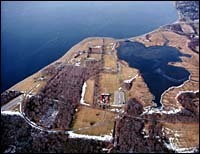
along Narragansett Bay in Bristol.
After more than three decades of protecting what’s long been considered Rhode Island’s greatest natural resources, Save The Bay officials believe their greatest challenges may still lie ahead.
That was the tone of the organization’s 31st Annual meeting held Sunday, March 4 at the Newport Regatta Club.
Seifert Systems Invests in Energy Efficiency to Strengthen Operations
For manufacturers, energy is more than just another operating expense. It plays a critical role…
Learn More
“Building a better future for Narragansett Bay is what Save The Bay does,” said Executive Director Curt Spalding in his speech to the more than 150 people attending. “Sometimes it is built pebble by pebble. Sometimes it is built stone by stone. Other times it is built boulder by boulder. In the year ahead we have three boulder-sized issues that will greatly determine what kind of Bay we give our children.”
Those three issues are: a port development at Quonset Point/Davisville, dredging of the Providence River channel and local marinas, and the pollution of Mount Hope Bay as the result of the Brayton Point Power Plant.
“Never in my 13-year history with Save The Bay have so many important issues been so ripe,” Spalding said. “Fortunately, Save The Bay has never been as capable as we are today.”
Kate Kilgruss, co-chair of the Explore the Bay Campaign, added to Spalding’s list of challenges.
“We need to connect the future leaders of the watershed to the most important resource we have — Narragansett Bay,” she said. “The future health of our bay depends on it.”
Launched last year, the Explore the Bay Campaign is a $6.5 million campaign, which includes the construction of an education center on the Providence River, a satellite learning center on Aquidneck Island, two new education vessels, dock access on the East and West Bay and $2 million to the endowment. Already the group has raised almost 51 percent of its goal.
“We need to be the beacon for those who went before us and we need to be beacon for those in the future,” Kilgruss said. “This campaign will help us do that.”
Save The Bay ended its fiscal year June 30, 2000 with assets totaling nearly $2.9 million, and a net worth of $2.7 million. The organization has a current ratio of more than three to one — meaning its operating assets are three greater than its operating liabilities. Michael Akkaoui, treasurer for the group noted that 85 percent of the group’s funding comes from gifts, grants and other contributions, while 82 percent of its expenses are for environmental protection, preservation, education, and member programs.
The event also recognized members of the community who have worked with Save The Bay. Presented Environmental Leadership Awards were Jim Dodge, chairman of Grow Smart Rhode Island and former chairman, president and chief executive officer of Providence Energy Corporation and Providence Gas Company; and Dave Monk, retired director of the Salt Pond Coalition in Charlestown.
Citizens Financial Group Vice Chairman Mark Formica presented the Citizens/Save The Bay Young Environmentalist Awards to three Rhode Island middle school and high school students involved with the Seagrasses In Classes Programs. The three students studied eelgrass growth — information that will be used by Save The Bay to restore the eelgrass habitat in Narragansett Bay.
“These projects are all real — eelgrass is the primary source of food in Narragansett Bay,” Formica said in his remarks. “This program connects students with the environment, while at the same time restoring the ecosystem.”
And while the inclement weather prevented both U.S. Congressman Patrick Kennedy and the keynote speaker, Maryland Congressman Wayne Gilcrest from attending — those who did attend enjoyed a traditional Rhode Island lobster dinner.
“This is one classy act,” joked Newport Mayor Richard Sardella. “Who else would have a clam broil that required you to wear a jacket and tie?”