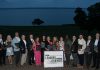
The Slater Center for Biomedical Technology reports that it has invested $741,036 in eight biotech startups working to address a range of medical needs, from enhancing the efficacy of chemotherapy to restoring motor function for people with spinal cord injuries and neurological disorders.
The Slater Center’s 2001 Commercial Innovation Awards cap a five-year record of success, said Executive Director David J. Livingston.
Seifert Systems Invests in Energy Efficiency to Strengthen Operations
For manufacturers, energy is more than just another operating expense. It plays a critical role…
Learn More
“Slater Biomed was established on the strength of Rhode Island’s biomedical research community and a belief that, with the catalytic force of seed funding and business development support, a viable biotech industry cluster could be built here. We have not been disappointed.”
Livingston noted that four Center-supported firms have raised a collective $50 million in private capital in the past 18 months – representing a return of more than 30-to-one on the state’s investment in Slater Biomed – and that the Center’s 15 affiliated companies have attracted an additional $8 million in federal grants and loans.
“The energy in Rhode Island’s biomedical industry is palpable,” said Livingston.
The Center’s 2001 Commercial Innovation Awards were presented to:
- $100,000 in the form of a grant to Roger Williams Medical Center for Chemosynergy, of Providence. The company plans to develop biological anti-tumor factors as anti-cancer drugs. These naturally occurring compounds are relatively non-toxic, but when combined with established and anti-tumor therapies, they can markedly enhance regression of known tumors. Chemosynergy plans to conduct pre-clinical toxicity studies, and subsequently to evaluate their therapies in human clinical trials.
- $75,000 in the form of a loan to the company, to Cyberkinetics, Inc., of Providence. The company is developing and commercializing implantable neural prosthetic devices to restore movement to paralyzed individuals. The company will access expertise in experimental and clinical neurosurgery, as well as in the design of neural devices that can record and decode a patient’s intended movements. Cyberkinetics will design and implant devices to restore motor function in patients suffering from spinal cord injuries, Lou Gehrig’s disease, and a wide range of other neurological disorders that result in paralysis.
- $75,000 in the form of a loan to Medical Monitoring Technologies, Inc., of Providence. The company will design portable monitors that diagnose respiratory conditions related to asthma. The devices will alert the patient to his/her respiratory condition, and communicate wirelessly with medical professionals who treat the patient. The company’s device will use digital signal processing of acoustic information.
- $30,000 in the form of a loan to the company and $62,500 in a grant to Roger Williams Medical Center, to Organomed, Inc., of Coventry. The company has designed and tested novel derivatives of the powerful anticancer drug taxol, which is the preferred treatment for breast and ovarian cancer. Organomed’s taxol derivatives have demonstrated higher potency and improved physical properties in laboratory testing performed by the National Cancer Institute.
- $100,000 in the form of a loan to the company, to Pan Pacific Pharmaceuticals, Inc., of Lincoln. The company is commercializing proprietary medicines that are created from natural therapeutics using advanced biotechnology and pharmaceutical sciences. The company has implemented a rational process for evaluating and developing single molecule, differentiated drugs from traditional Chinese medicines. Pan Pacific has identified one such compound from a mixture of medicinal plants that has been used for centuries for pain relief and for the treatment of rheumatoid arthritis, leukopenia, lupus, and other disorders of the immune system.
- $100,000 in the form of a grant to Rhode Island Hospital, to ProThera Biologics, of Providence. The company’s mission is to develop and commercialize protein-based “theranostic” and therapeutic products for human diseases. Theranostics is a new market area that utilizes predictive tests to make informed decisions about individualized therapy.
- $100,101 in the form of a grant to the University of Rhode Island, to Semiranbiotec,
of North Kingstown. The company is developing novel antifungal agents for the
improved treatment of serious human infections. It is employing a unique drug
discovery approach and proprietary technologies in fungal cell targets. Its strategy
involves creating bifunctional drugs that block more than one fungal enzyme target.
The new drugs being created by the company are expected to have improved bio-distribution
and safety, and more convenient dosing compared to currently marketed antifungal
therapies. - $98,435 in the form of a grant to the University of Rhode Island, to Signalceuticals, Inc., of North Kingstown. The company is developing novel technology to determine how chemicals and drugs are metabolized by humans and animals. It has designed a proprietary laboratory to measure how a test compound stimulates the production of the principal detoxifying enzyme, cytochrome P450. The level of cytochrome P450 can dramtically affect the clinical response to a drug or toxic substance. Working in laboratories at the University of Rhode Island, the company intends to create a database of cytochrome P450 responses to known drugs, and to provide testing services to pharmaceutical and agricultural products companies.
The Slater Center for Biomedical Technology — formerly known as the Rhode Island Center for Cellular Medicine — is one of six technology commercialization centers operating under the auspices of the Samuel Slater Technology Fund.