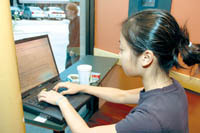
With more computers able to connect to the Internet from remote locations these days, more precautions are required to prevent any possible security breaches.
The good news is businesses are learning more about the dangers of unauthorized Internet use and how to prevent it, said Alan Reiter, president of Wireless Internet and Mobile Computing Consulting in Maryland.
Seifert Systems Invests in Energy Efficiency to Strengthen Operations
For manufacturers, energy is more than just another operating expense. It plays a critical role…
Learn More
The bad news is with wireless Internet booming, there are more consumer connections available, and many people “don’t think it’s necessary or don’t know how to protect their computer from intrusion,” said Reiter.
However, one security threat, called “wardriving,” is described as using a car and a Wi-Fi-equipped computer to detect Wi-Fi (wireless fidelity) “hot spots” in an area. For the most part, this activity is harmless, said Reiter, but it can open the opportunity to theft.
The most updated operating systems for computers, Windows XP for PCs and Mac OS X for Macs, automatically search for available Wi-Fi signals, said Reiter. These new laptops and computers are equipped with Wi-Fi connection cards.
A router then links a local network to a remote connection. Most routers are equipped with either Wired Equivalent Privacy or the more advanced Wi-Fi Protected Access as a way of “blocking intrusion” into the system. A code of letters and numbers is required to access the connection.
However, these security features are generally disabled by default “to make it as easy as possible to set up a Wi-Fi connection,” said Reiter.
The security feature is controlled by software on the computer and must be enabled in order to block the signal that is broadcast by the router that can trace the name back to a specific computer, said Reiter.
Users can also set up a media access control address that attaches a unique identifier to networking equipment, and are even more secure, according to Reiter.
Glenn Fleishman – a blogger and senior editor of jiwire.com, a directory of Wi-Fi hot spots – said with few exceptions of now-defunct suppliers, every Wi-Fi gateway ever sold can have security enabled.
David Thomson, a Verizon Wireless spokesperson, said customers are encouraged to have passwords that are not easily determined protecting their accounts.
When online accounts are established, an automatic text message is sent to the consumer to ensure the connection was not made fraudulently.
“It helps to make sure the right people are accessing the account,” he said.
Rhode Island does not have statutes applying to wireless Internet theft, according to the attorney general’s office. There have been several cases in which defendants were accused of using a computer connection for identify theft, embezzlement and conspiracy.
Security Focus, an Internet-based resource for security information, said the first likely conviction for wardriving came down in August 2004. A Michigan man is facing a maximum of a year in jail as an accomplice to part of a larger scheme involving three men attempting to steal credit card numbers from a Lowe’s hardware store by hacking into a corporate system signal that was discovered through a night of wardriving. In April, a Florida man was arrested for stealing a neighbor’s Wi-Fi signal and trying to hack into his computer.
Federally, the Computer Fraud and Abuse Act, passed in 1984, covers anyone who “intentionally accesses a computer without authorization or exceeds authorized access.”
However, the interpretation for this statement is up for debate.
“Convictions for (wardriving) are possible where it’s part of a larger criminal case, but it shouldn’t happen in the absence of some other criminal purpose, like stealing credit cards, or knowledge that the network is closed. Wardriving isn’t criminal,” said Jennifer Granick, director of Stanford Law School’s Center for Internet and Society, in a Security Focus article last year.
Parry Aftab, cyber crime lawyer wrote, “We can argue until we’re blue in the face, but the answer doesn’t change – it’s wrong and illegal,” on her blog, the Privacy Lawyer, in August.