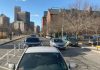
If there was a prime example of what can happen to a city block when investors walk away from their properties, Tanner Street in South Providence was it.
In the giddy 1980s real estate market, prices on Tanner Street and its surrounding areas soared. Properties starting at $30,000 hit $90,000. Investors scrambled to catch the windfall.
Seifert Systems Invests in Energy Efficiency to Strengthen Operations
For manufacturers, energy is more than just another operating expense. It plays a critical role…
Learn More
But then the market collapsed, and the last investors in were stuck with properties worth less than their mortgages. Instead of selling, many walked away. Abandoned houses burned. The neighborhood plummeted.
But in the early 1990s, a nonprofit community development group stepped in. The group, called SWAP Inc. — Stop Wasting Abandoned Properties — started buying houses, fixing them, and selling them to low and moderate income families. The result has been the revival of an entire city block — from Tanner to Providence, Somerset, and Pearl Streets.
“When we first looked at that site there was one building occupied — one house with lights on at night,” said Chris Barnett, spokesman for the Rhode Island Housing and Mortgage Finance Corp., which allocates federal housing subsidies to developers on behalf of the state. “Today Tanner Street is a thriving neighborhood.”
It is thriving because many of its residents are home owners. That’s the premise behind SWAP, which was one of Providence’s first community development groups when it started 23 years ago. It is now one of the more than 20 nonprofit, low-income housing groups statewide that have united to form what is called The Housing Network.
SWAP uses federal subsidies to buy houses, rehabilitate them, and sell them to families that earn no more than 80 percent of the median family income of the area. In Providence that’s $40,500 for a family of five. The theory is that neighborhoods improve when residents own their homes, and thus invest more in the community. Houses in the Tanner block are a good example. Once littered with abandoned and burned-out properties, the neighborhood has rebounded. New houses have been built, old ones rehabilitated.
One of the beneficiaries is Rosetta Clarke-Brooks, who came to the United States from Liberia six years ago. Recently she purchased a home on Providence Street that SWAP had fixed up. She now lives there with her husband and children, who have recently come over from Africa to join her.
“You look at the house and it looks almost brand new,” Brooks said. “But this is a very old house.”
Across the street from Clarke-Brooks’ single-family home is a rehabbed tenement house with a yard enclosed by a new black iron fence. The improvements came after SWAP acquired the properties with money from a variety of sources, including the federal Department of Housing and Urban Development’s HOME program, which provides subsidies to developers to build affordable housing.
But SWAP, located at 439 Pine St., uses more than just government money to accomplish its tasks. It has an institutional knowledge of the area. It has a nine-member staff who research the market. They work quietly. This way, SWAP gains a strong idea of the values for houses on the market — increasing its bargaining power.
“We do all our own research,” said Executive Director Carla Young. “We know the market probably better than most appraisers who would come here. We try to stay as quiet as we can.”
When it started, SWAP served the entire city. In recent years it has limited its coverage area to South Providence and has rehabbed some 20 to 30 homes in upper and lower parts of the area. It now has enough inventory to supply it with 16 to 18 more months of work, Young said.
Gallup Street is another of SWAP’s accomplishments. Like Tanner Street, it was a victim of the real estate and banking crisis. Like Tanner Street, many of its houses were taken over from the banks from the Rhode Island Resolution Trust Corp., a federal agency that was created to liquidate the assets of failed lenders. After acquiring the properties and clearing their titles — a process that took several months — SWAP knocked down two houses on the street and rehabbed four more. Each of the four remaining houses gained bigger backyards in the process.
But fixing up properties alone will not save neighborhoods. The people who live there are ultimately in charge. For example, residents of Gallup Street formed a group that ended up building a $250,000 park that has given kids in the area a place to hang out. The park, located on Harriet Street, is headed by Michelle Ross, who purchased a home on Gallup Street through SWAP in 1995. Working with City Councilor John H. Rollins, D-Ward 10, the group was able to procure funds from bond money allocated to the ward to build the park. There is now a basketball court and a water park that was packed with children this summer, Ross said.
The group has also organized a soccer league and is attempting to start a program to encourage children under 15 to obey the law and wear helmets when they ride their bicycles, Ross said.
SWAP acts as a catalyst for these groups to form by reviving its coverage area, one neighborhood at a time. Its goal, Young said, is to build the southern part of the city in concentric circles.
“I keep saying that my job is to put SWAP out of business,” she said. “But we’ve been around for 23 years, and we’ve got enough work for two more years.”