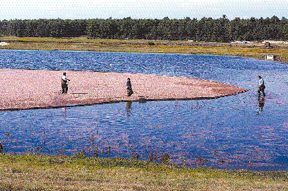
Foul weather sours local cranberry yield
The cranberry industry is making a comeback, but growers in southeastern New England won’t be taking advantage of the bounty.
A wet, chilly spring and a damp summer have led to insect problems, rot and delays that have brought down the amount of fruit growers expect to produce this season.
Beyond Cash Donations: How New Forms of Giving Are Transforming Not-for-Profit Accounting
Evolving Funding Landscape for Not-for-Profits Not-for-profit organizations are being asked to do more with less,…
Learn More
“The crops appear to be average and above average everywhere but in Massachusetts,” said John Decas, president and CEO of three cranberry companies under the Decas name. “The cranberries have taken three extra weeks to color up. The last couple weeks we’ve been sitting up here like the Maytag repairman.”
Decas, who has 300 acres of bogs in southeastern Massachusetts, said the poor weather conditions started back in August of last year. A hot, dry summer and a drought in the fall stressed the vines.
A cold winter added further stress to vines while the soggy spring and summer led to over-fertilization, which puts further pressure on the plants.
“The horrible spring really disrupted the growing cycle,” he said. “In addition, 20 percent of the crop was lost to insect damage.”
According to the Cranberry Marketing Committee, the Massachusetts crop will likely be smaller than the 1.45 million, 100-pound barrels produced last year.
“The problems have been widespread,” said CMC General Manager David Farrimond. “A lot of the big farmers have said their yields are way down.”
Growers in southeastern New England, the second-most productive cranberry region in the United States, will likely produce less than growers in Wisconsin, Canada and Oregon.
These conditions set the area back at a time when the cranberry market is improving. According to Decas and officials at Ocean Spray, competing companies that buy cranberries from growers, the price per barrel is expected to hit $30.
This is the third consecutive increase since the industry hit rock bottom in 2000. An over-supply of berries resulted in a price that hit $11 a barrel.
Bob Hiller, owner of Hiller Cranberries in Rochester, Mass., said the increase is high enough to break even this year and maybe even make a little profit.
“I am feeling optimistic,” he said. “I think we have the low point and it will be a struggle climbing up. But, the atmosphere is more aggressive than there had been – the market appears stronger.”
He added that he expects to have an average crop when he starts a full-fledged harvest sometime this week.
Chris Phillips, spokesman for Ocean Spray, said his company expects to pay between $27 to $30 per barrel, which is “close to and beyond” the price of production.
“This is a result of managing the supply and innovation in the sales of cranberries,” he said.
He said business at Ocean Spray, a grower-owned company with 800 cranberry farmers, has been moving along nicely, although there are still many competitors in the beverage marketplace.
“We are continuing along the pipeline of innovation with new products coming,” he said. “We need to be able to introduce new products on a regular basis.”
Decas said he is not sure what price he will give to the stable of 200 cranberry growers. He said he expects the average price to hover around $30 but much of this depends on what Ocean Spray does.
“They set the industry standard,” he said.
Decas said his company is making inroads with its sweet and dry cranberries, the fastest-growing market in the industry; this includes supplying candy, cereal and trail mix makers with dried cranberries.
Jeff LaFluer, executive director of the Cape Cod Cranberry Growers’ Association, said the market is not where it needs to be to keep many of the small family farmers in his ranks solvent.
He said a trend is continuing in which farmers need full-time employment in addition to growing cranberries. These conditions began back when the market hit rock bottom.
“You can’t make a living off less than 20 acres anymore,” he said.
Farrimond said that since so many farmers are getting second jobs, they are spending less time on tending to the bogs. Smaller returns on their crop results in growers spending less on items like insecticides.
“This and the wet spring created good conditions for insects,” he said.
Jason Perez-Dormitzer is a freelance writer.