Inconsistent data about Rhode Island’s health care system could give anyone a headache.
The Commonwealth Fund’s 2017 Scorecard on State Health System Performances found that Rhode Island has the nation’s fourth-best overall health care system performance.
Yet, WalletHub’s recent “Best and Worst States to Practice Medicine” ranked the Ocean State No. 47, and according to a March 2017 report by 24/7 Wall St., Rhode Island doctors rank 41st in compensation.
Despite those poor rankings, the state has the nation’s fourth-highest physician concentration – 95 per 100,000 residents. The rankings don’t tell the entire story, however.
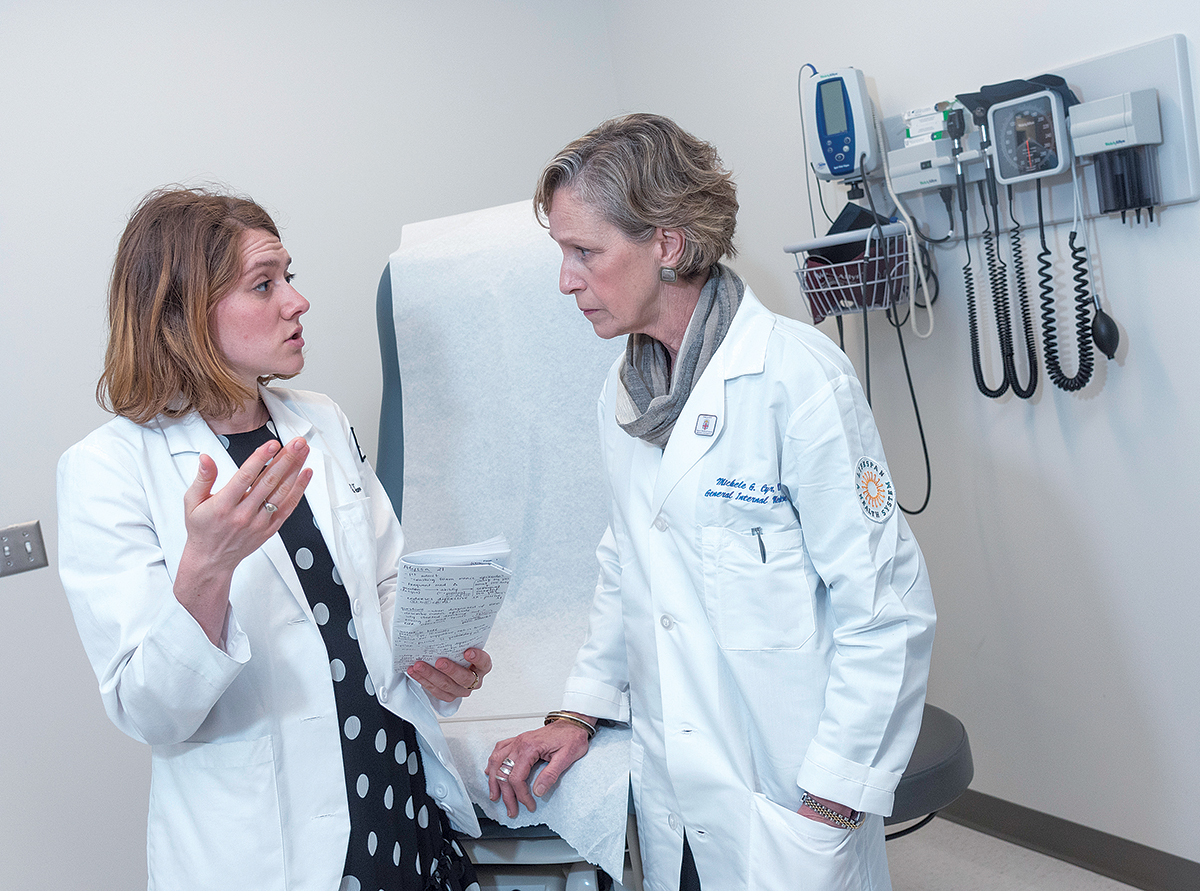
Doing a doctors’ head count doesn’t work well, said Dr. Michele Cyr, associate dean for academic affairs at The Warren Alpert Medical School of Brown University, as not all doctors see patients full time and some physicians are oversubscribed.
Recruiting and retaining primary care physicians is one of Louis R. Giancola’s top three concerns. Giancola, president and CEO of South County Health, said, “You need an array of specialists and PCPs to be a good health system.”
Illustrating the problem, Giancola told of a recently retired PCP who transferred his large practice to a nurse practitioner because no PCP wanted it.
That’s not news to Dr. Sarah Fessler, East Bay Community Action Program medical director and Rhode Island Medical Society president. While many aging PCPs anticipate retirement, not many younger doctors are recruited successfully to practice here, said Fessler, who hears anecdotally of patients waiting three months or more for an initial PCP appointment.
Cyr, also a professor of medicine and of medical science at The Warren Alpert Medical School, and Fessler suspect that insufficient PCP access may drive some patients to seek nonemergency medical care from hospitals’ emergency departments. While Giancola doesn’t see much ED abuse or misuse, he acknowledged that many young adults don’t establish relationships with a PCP, while many women seek general medical care from their OB-GYN.
One way physicians are able to combat the low commercial reimbursement rates responsible for the WalletHub ranking is to teach at Brown. “It can be very rewarding for doctors to be able to teach medical students, fellows and residents,” said Cyr.
Aligning with a larger academic system – such as Care New England’s proposed acquisition by Partners HealthCare of Massachusetts – may help to support the recruitment and retention of physicians, said Giancola. South County Health, for instance, is in exploratory discussions with the Yale New Haven Health System.
Couple Rhode Island’s relatively expensive cost of living and lower reimbursement rates with many young doctors carrying large medical school loans, and Giancola, Cyr and Fessler agree: Many physicians – including some completing their residencies here – feel squeezed financially here.
This reality does not bode well for the future. Personal experience and data confirm increased numbers and use of PCPs lead to better health care quality and decreased cost, said Fessler, who fears shortages of PCPs – the “quarterbacks for a person’s care” – will lead to the opposite.
The Warren Alpert Medical School has adopted initiatives designed to increase the likelihood of keeping young PCPs here, including enrolling 24 additional medical students who are interested in primary care or family medicine through an American Medical Association grant, said Cyr.
The recent creation of Brown Physicians Inc., a collaboration of six medical groups and The Warren Alpert Medical School, “promises to be an excellent way to retain and recruit excellent physicians to Rhode Island,” she said. “It provides even closer ties to the medical school and more support for teaching and research.”
Rhode Island Foundation Strategic Initiative Officer for Healthy Lives Larry Warner said the foundation is focused on creating an environment that encourages PCPs to practice here – from funding systemic improvements, to offering a student-loan forgiveness program. Still, he acknowledges there is work to be done.
Fessler believes Rhode Island may have to face a crisis before strategically addressing comprehensive health care access. Long before the Affordable Care Act, Massachusetts’ “Romneycare” shored up insurance companies and worked toward comprehensive coverage. Rhode Island may be able to do the same, she suggested.
While R.I. Department of Health Director Dr. Nicole Alexander-Scott has pushed for a coordinated approach to health care, Fessler said the agency’s efforts could be far more robust with appropriate funding.
While the Office of the Health Insurance Commissioner under Dr. Kathleen C. Hittner has provided great leadership in certain areas, said Giancola, there has been a lack of overall health care leadership. He recommends Rhode Island state government, which controls a tremendous amount of insurance premiums, take charge. “We know we have a shortage of PCPs … and we have a crisis in behavioral health,” yet, he added, “there’s no plan.”