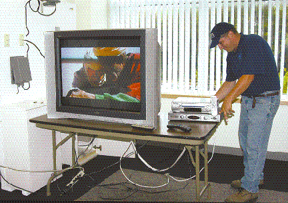
and other equipment for high-definition.
High-definition television is the wave of the future, service providers say, and it’s the kind of television experience that will have consumers feeling even more like they’re in the middle of a Western shootout, flying through space or taking cover in a jungle battle. The only catch – they need a special TV set to get the thrill.
“It’s exploding – a year from now, this is going to be a huge business,” said Mark Bishop, senior vice president of hardware purchasing for the National Cable Television Cooperative Inc. in Kansas City, a group that helps smaller cable companies compete with larger providers. “It’s the evolution of TV in general – people are always looking to get a better picture.”
Beyond Cash Donations: How New Forms of Giving Are Transforming Not-for-Profit Accounting
Evolving Funding Landscape for Not-for-Profits Not-for-profit organizations are being asked to do more with less,…
Learn More
High-definition TV, or HDTV as it’s called in the television industry, is rapidly catching on across the country, and recently here in Rhode Island two major cable providers announced they would be offering the service.
Full Channel TV President and CEO John Donofrio Jr. said his company plans to offer high definition to its customers before the end of the year. Currently, Full Channel serves Barrington, Bristol and Warren, and will also be looking to expand into East Providence, he said. Donofrio said he’s still working on the details of Full Channel’s HDTV service, and isn’t sure if customers will have to rent an HD box for service.
Cox Communications, which services the majority of Rhode Island, also planned to begin offering Cox HDTV to its customers as early as last week, according to Leigh Ann Woisard, a Cox spokeswoman. Customers will be able to rent HD boxes from Cox for $9.99 a month, she said, much like its digital customers do now. And there’s definitely a demand for an improved picture and better sound, she said.
“It’s the next great thing in TV viewing,” Woisard said. “There is a very healthy appetite for HDTV, and it will only continue to grow.” Currently, she said, there are close to 1,000 people on Cox’ waiting list for HDTV service.
One snag in providing service now, Donofrio said, is that few subscribers have HDTV-ready television sets. And although prices for the sets have settled, they’re still more expensive than a normal cable TV set.
“When the cost of the TV comes down, high definition will definitely jumpstart,” he said. “It’s going to be fantastic, but first it has to be affordable.”
According to Bishop, 43-inch HDTV sets in Kansas City are selling for about $1,999, for the first time falling below the $2,000 mark. He expects that by Christmas, the same sets will be going for about $1,000 and will continue to become more closely competitive in price to a regular set.
“The shares of TV sets being bought now are HD-ready or HD monitors,” he said. “They have the capability of carrying HD,” but can still be used for regular viewing with cable or digital cable. Most likely, though, once people spend the money to purchase a TV set that is both regular viewing and HD-capable, they’d probably want to have the clearer picture with HDTV, he said.
“Once you’ve seen the HD product, our feeling is that it makes regular TV look horrible,” Bishop said. “The difference is dramatic; the clarity is unbelievable.”
Imagine watching a view from a plane flying over a cornfield, a tractor harvesting the corn, and a red barn.
With HDTV, viewers can see the individual leaves on each cornstalk, see the tread on the tractor and see the grain of the wood on the barn and see actual spots where the red paint has worn off – that’s the difference HD makes, Bishop said – he’s seen it.
“It’s just a far more intense experience,” he said, likening it to the experience moviegoers get seeing a movie scene for the first time.
The federal government has mandated that regular analog cable be phased out by 2006, to be replaced by digital and HD, but Bishop doubts it will happen by then. He does, however, expect for HD to grow in popularity, from about 6 million HDTV sets in the United States now, according to the Consumer Electronics Association, to more than 31 million in 2006. By 2010, that number could easily double, he said.
As for Full Channel’s service, Donofrio said he’s unsure whether the monthly rate to his customers will change. Cox will offer networks including Showtime, Discovery, HBO, NESN, ESPN and another channel that will offer movies and other special programming in high definition, and is in the process of having more channels sign on, with others to follow, Woisard said. Discovery and ESPN will be free with the initial rental, she said. As more channels sign on, price will be determined by what channels the customer already has, she said. For instance, if a customer already has TBS Superstation on their digital cable, it would be free in HD.
“We’re joking about how it’s going to change the way people produce TV,” Bishop said. “You can see every flaw.”
For the complete current issue, visit our subscription Web site, or call (401) 273-2201, ext. 227 or 234.