the Manufacturing Jewelers and
Suppliers of America.
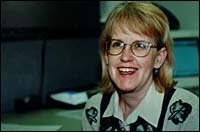
As the new director of education at the Manufacturing Jewelers and Suppliers of America, Mary Walek has a lot to say.
The former executive director of the Attleboro Area School-to-Career Partnership, Walek came to MJSA, a national trade organization that represents more than 1,500 members only three months ago, but already she has big plans.
Beyond Cash Donations: How New Forms of Giving Are Transforming Not-for-Profit Accounting
Evolving Funding Landscape for Not-for-Profits Not-for-profit organizations are being asked to do more with less,…
Learn More
Talking about a mile-a-minute and pausing only to make sure she is using the right terminology, Walek outlines what she believes to be the future of the organization’s education program.
“We need to focus on our systems, not programs,” she said. “Programs are isolated. When you are in a system, different pieces inform each other. I think that is the template for new workforce development.”
Though education has always been a part of the MJSA, Walek said she was hired to bring a “new identity” to the program.
At the heart of her plan, Walek’s said is understanding what individual membership organizations are looking for and “linking” those concepts on the national level. She plans to start in her own back yard with the Rhode Island and Southeastern, Massachusetts area.
“When we are building programs that link to each other it allows us to have an informed process,” Walek said. “Our intention is to start here, with companies close by and then move to the national level.”
And while those outside of the industry may still associate jewelry manufacturing with a dusty plant, Walek said today’s companies are the exact opposite, often embracing new technology and looking for a ways to constantly train their workforce.
“The requirements in this industry are very sophisticated,” she said. “For example the demands for a polisher are very specific and immediate and we need to address these needs in terms of education as they develop.”
In an industry like this one, Malek said, education and training are in the same family as “education most often leads to specialized training.”
Malek said she hopes to reach out to many of the organization’s members at this year’s Expo Providence & Technology Showcase scheduled for April 1 through the 3. A biannual event, Malek said this year’s program called, “Connecting people with products,” is focused primarily on education.
“We want people to identify this as a learning source,” she said.
This year’s programs will include more than 40 seminars following four topic tracks, including the Export Excellence Series, the Sales and Marketing Series, the Business Strategies Series, and the New Technology Series.
“In the past, people have been able to attend seminars, but this is more about in-depth learning,” she said. “When taken as a whole track these seminars turn into a symposium, where some can leave, having learned enough about a subject to go back and incorporate it in their daily business activities. They will have all of the component pieces.”
John Harvey, communications director for the MJSA, said what’s also interesting about these programs is that they aren’t just from the members of MSJA. And while he said the trade-show itself is focused on “the guts of the jewelry industry,” the seminars themselves have a wider scope and are open to all businesses. Harvey said he liked the idea of incorporating other Rhode Island and Southeastern Massachusetts businesses.
Malek said she is also working with the organization’s membership to develop ways to deal with education and training — using programs like the Workforce Development initiative, as well as school-to-career.
“I have begun to visit with local members to keep in touch with what they think is important,” she said. “We have been processing and assessing all the pieces and making recommendations. People have been very receptive.”
Both Malek and Harvey agree the key to a successful jewelry industry in the future is finding and training workers.
“Continued training and creating an incumbent career paths are key in this industry,” Walek said. “Education is the first place to start.”