Six months ago, Apple Inc. and Google LLC introduced a new smartphone tool designed to notify people who might have been exposed to the coronavirus, without disclosing any personal information. But for the most part, Americans haven’t been all that interested.
Fewer than half of U.S. states and territories – 18 in total – have made such technology widely available. And according to a data analysis by The Associated Press, the vast majority of Americans in such locations haven’t activated the tool.
Beyond Cash Donations: How New Forms of Giving Are Transforming Not-for-Profit Accounting
Evolving Funding Landscape for Not-for-Profits Not-for-profit organizations are being asked to do more with less,…
Learn More
Data from 16 states, Guam and the District of Columbia shows that 8.1 million people had utilized the technology as of late November. That’s about 1 in 14 of the 110 million residents in those regions.
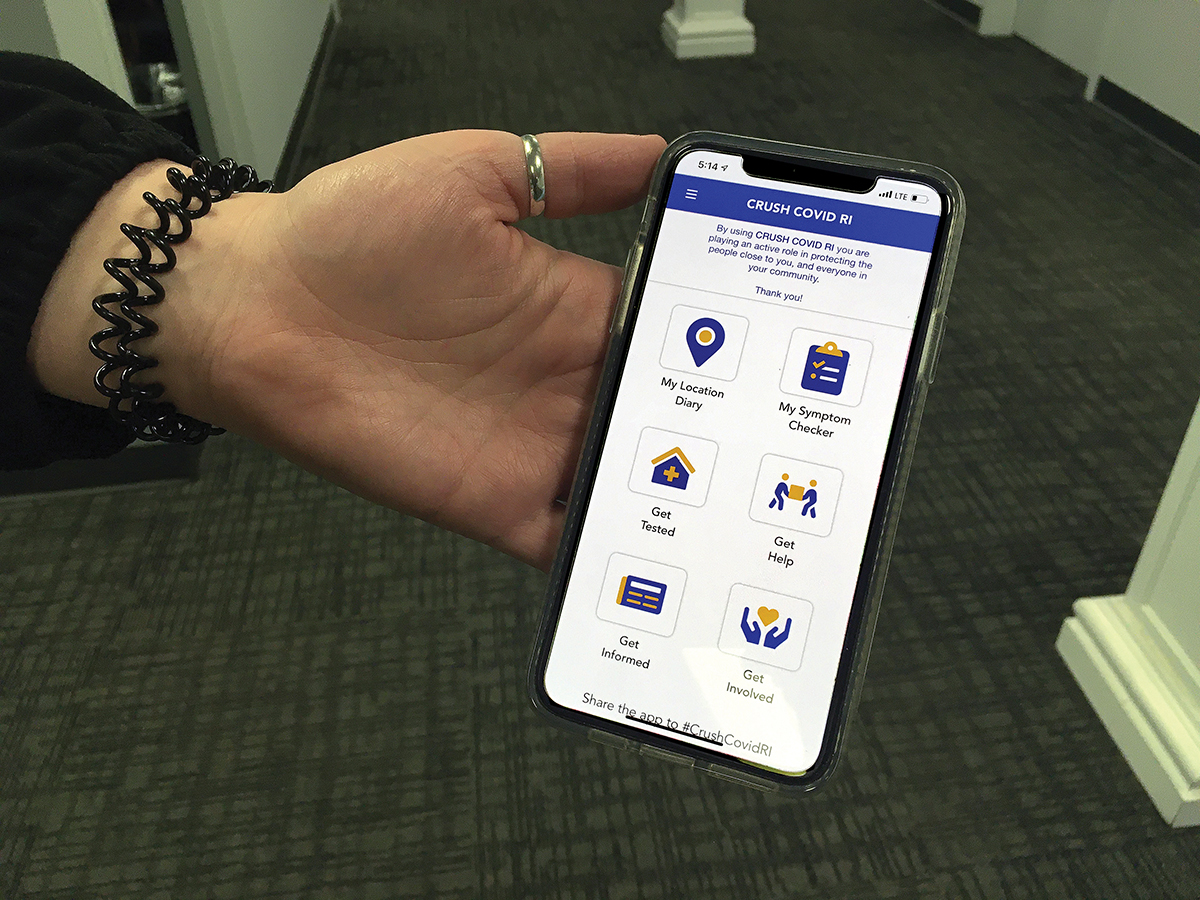
In Rhode Island, the Crush COVID RI contact-tracing app was introduced in May. Since then, it’s been downloaded by 95,000 people, according to the R.I. Department of Health – about 10% of the state’s 1 million residents.
The Rhode Island app keeps a “location diary,” which tracks where a user has traveled for up to 20 days at a time. Users can still decide whether to share the information with health officials if they’re infected by the coronavirus.
A health department spokesman said some people have shared the data electronically while others have shared it verbally. “It has been a very valuable tool for our case investigators,” said agency spokesman Joseph Wendelken.
Such apps can bolster one of the most difficult tasks in pandemic control: Tracing the contacts of people infected with the coronavirus in order to test and isolate them if necessary. In practice, however, widespread COVID-19 misinformation, the complexity of the technology, overwhelmed health workers needing to quickly confirm a diagnosis, and a general lack of awareness have all presented obstacles, experts and users say.
“There’s a lot of things working against it,” said Jessica Vitak, an associate professor at the University of Maryland’s College of Information Studies. “Unfortunately, in the U.S., COVID has been politicized far more than in any other country. I think that’s affecting people’s willingness to use tools to track it.”
Charlotte, N.C., lawyer Evan Metaxatos was thrilled to learn in November about his state’s tracking app, called SlowCOVIDNC. He immediately downloaded it and got his parents and pregnant wife to follow suit.
But they’re still outliers in the state, which launched the app in September with little fanfare. Of roughly 10.5 million state residents, only 482,003 had installed it through the end of November.
“It won’t work great until everyone’s using it, but it’s better than nothing,” Metaxatos said.
Apple and Google co-created the primary technology behind such apps, which use Bluetooth wireless signals to anonymously detect when two phones have spent time in close proximity. If an app user tests positive for the virus, that person’s phone can trigger a notification to other people they’ve spent time near – without revealing names, locations or any other identifying information.
In states such as Colorado, Connecticut, Maryland and Washington, as well as Washington, D.C., iPhone users don’t even have to download an app. In fact, Apple prompts users via pop-ups to activate the notification system by adjusting their phone settings.
In these states, adoption rates are notably higher. But even in the most successful state, Connecticut, only about a fifth of all residents have opted into this tracking.
Virginia’s COVIDWISE app launched on Aug. 5. Since then, fewer than 1 in 10 residents have downloaded it, though the state estimates almost 20% of Virginians between the ages of 18 and 65 with a smartphone have done so. Delaware’s app downloads account for about 7% of the state’s population.
New York launched its app on Oct. 1. It recently surpassed 1 million downloads, which amounts to about 5% of the population. New Jersey and Pennsylvania have seen less use, with a 4% download rate.
Adoption is even lower in Wyoming, North Dakota, Michigan, Nevada and Alabama, with users representing only 1% to 3% of their state populations. The apps, which are free, can be found in Apple’s app store and the Google Play store for Android devices; they’re also typically available on state health-department websites.
Security experts praise the Apple-Google system for protecting users’ anonymity, but it’s been a tough sell for many people. American users say partisanship, privacy concerns and stigma surrounding COVID-19 have kept participation low.
Lee McFarland, a loan officer from Grand Forks, N.D., was eager to download his state’s Care19 Alert app but said he couldn’t push a “Notify Others” button after getting the virus in late October.
“If you test positive, a public health official will call and verify your code,” said a message on McFarland’s app. “This ensures that only verified positive COVID-19 people can send notifications.”
McFarland said he forgot to tell the health worker he had the app installed on his phone. He was unsuccessful in following up with the worker to get the needed code, and has since deleted the app.
With reports from PBN Staff Writer Alexa Gagosz.