the South Providence Development Corporation.
Development corporation making strides in South Providence neighborhood
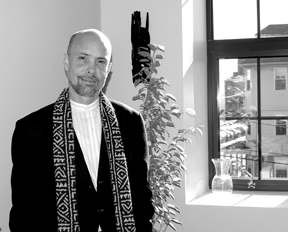
Joseph E. Newsome
Position: President and executive director of the South
Providence Development Corporation
Beyond Cash Donations: How New Forms of Giving Are Transforming Not-for-Profit Accounting
Evolving Funding Landscape for Not-for-Profits Not-for-profit organizations are being asked to do more with less,…
Learn More
Background: Newsome has been in charge of the corporation
since its inception in 1995; before that he was a member of the General Assembly
from 1989-1994; prior to that he owned his own business, Creative Communications.
Education: Bachelor’s from Williams College; Master’s in health care
administration from the University of Minnesota
Age: 48
Residence: Providence
Q. How did you get into this line of work?
A. If I had to describe my profession, I would probably say that I’m
a community organizer. Certainly my work now was formed by my terms in the General
Assembly representing a fairly low-income area of the city. That’s when I became
really aware of the fact that for the majority of the people, their needs had
to do with stable employment, a decent wage and benefits. There were an overwhelming
number of requests I received as a legislator to “help my brother, my cousin,
my aunt,” find a job. There was demand then – and I believe now – for organizations
that focus on economic development beyond the creation of affordable housing.
So when we started the development corporation in 1995, the philosophy was really
to find a way to address the formidable challenges of people and place on the
South Side. The primary entity to be credited for creating the South Providence
Development Corporation is Rhode Island Hospital, which has a 40-acre campus
in upper South Providence and is a major employer in this area. In 1995, after
nine months of studying what the needs of the neighborhood were through a questionnaire,
the decision was made to create a vehicle for proactive partnership because
the challenges were so immense that the belief then and now is that you really
couldn’t address them adequately unless you shared the responsibility and risk
between private and public partners. After Rhode Island Hospital initiated the
effort, we invited Women & Infants’ and St. Joseph’s Hospital to participate
and those three institutions formed the backbone of the corporation.
Q. You recently opened the Gordon Avenue business incubator. Tell us about
some of the other projects the corporation has undertaken.
A. Bringing this building (550 Broad St.) back online was our first
project. One of the next projects we did was partnering with the Black Contractor’s
Association of Rhode Island to restore an 1896 Victorian house and adjacent
carriage house which is next door – that had been abandoned for about 25 years
and today it’s home to about eight business tenants. It really was the first
business incubator on the South Side. We also partnered with the Dialysis Center
of Rhode Island, in helping them to construct a new dialysis center. One of
our most significant projects to date, and it’s ongoing, was creating from scratch
a new company called CleanScape. It provides commercial recycling services to
the business community. For eight consecutive years we have put young people
from the neighborhood to work in 15 to 20 different sites. Most of our current
initiatives try to creatively explore the nexus between urban job creation and
environmental stewardship. Another project we’ve been working on for three years
is the revitalization of the Grace Church Cemetery.
Q. What has motivated you to take on the challenge of revitalizing an urban
area that others had neglected in the past?
A. I’ve always believed that you need to start off addressing problems
where the needs are greatest. For poor communities here and elsewhere, the problem
is finding the capital to do the work that needs to get done, and quite often,
private investment does not feel safe coming into neighborhoods like South Providence.
Yet the people deserve much more – they get up every morning and go to work
and are trying to raise families. Poor communities don’t need to look poor,
and our approach has been to try to engage local residents in revitalization
and restoration and not just bring in people from the outside. Our approach
has always been to engage multiple partners in the work, thereby sharing the
risk associated with these kinds of economic-development ventures. Gordon Avenue
for example has about 20 different partners.
Q. Mayor Cicilline has spoken about bringing the renaissance into the urban
neighborhoods. Have you started to see this change in South Providence?
A. There’s been tremendous progress in South Providence over the last
10 years. A large part of the credit belongs to the small businesses and entrepreneurs
that help revitalize such commercial corridors as Broad Street, but also the
excellent work that the nonprofit housing organizations have done to restore
the housing stock and create many new units of affordable housing. Their work
is very evident and valuable in the neighborhood. With the new Met School, the
restoration of the Prairie Avenue branch of the public library, two new schools
on Thurbers Avenue, that is happening. However, and this is where the mayor’s
emphasis is so critical and on-target, Gordon Avenue represents what can be
done with an enormous quantity of vacant, abandoned or underutilized commercial
properties. In 2001 we commissioned a study by Brown and they documented 55
commercial buildings that were unused or underutilized, so these assets were
just sitting there deteriorating. Even in their deteriorated state they were
estimated at about $26 million.
Q. What is your hope for the future of South Providence?
A. It will take five to 10 more years to stabilize it, although I
think for the first time in 40 years, there was an increase in (property) valuation
in 2000. My hope is that it will remain a diverse community, where people of
all income levels will be able to live together. I hope it will become more
economically vibrant – a lot of businesses move away. And I certainly hope –
by involving the organizations that work here and the people who live here –
that we can accomplish the stabilization and transition without too much gentrification.
Q. The Gordon Avenue business incubator is the first of its kind. Where
did the idea of the “green and smart” office incubator come from?
A. I actually found the building – the owner at the time had run his
own business out of there for 21 years. He eventually closed the business and
then had this headache piece of real estate that came to our attention when
we were trying to find a building to operate our recycling company out of. …
It was obviously a very distressed building in the middle of upper and lower
South. So we bought it for a reasonable price and set about trying to decide
what it was we wanted to model there. The idea of a small-business incubator
surfaced and it seemed reasonable. Consistent with our effort to combine business
and economic development with environmental stewardship, we started to explore
how we could turn this into a building that conserved energy. Part of it was
a reflection on our need as a nation to wean ourselves from very expensive and
politically problematic fossil fuels.
Q. How can you and others convince business to reinvest in South Providence?
A. This kind of work requires partnerships that are committed and
it requires a lot of patience and persistence until you get to the tipping point
– when things start to happen on their own and you have the support of traditional
market forces. We’re not there yet. Our approach is to reach out to a corporation
that might have a real interest in the revitalization of a neighborhood either
by virtue of being here and having investments that can’t move like the hospitals,
or Fleet or Sovereign that do business in the neighborhood. We have not been
as successful in reaching out to involve the GTECHs and Fidelitys of the state
because they don’t quite understand the interest here, even though to the extent
that if the capital city struggles, the whole state struggles, they really do
have an interest. That’s a hard sell. One of the things we’ve been told is that
our profile is too low, too geographically limited – we’re not doing work statewide,
so it’s hard to attract the support of large companies. I think Mayor Cicilline
is absolutely correct that we have a wonderful capital city and the potential
is enormous, we have a beautiful downtown now, we have wonderful historic housing
stock in a walkable area. The downtown is revitalizing on its own momentum now,
and the challenge really is to go into the neighborhoods and make sure that
progress will be realized there as well.
Q. What will you be working on in 2004?
A. We’ll probably be working with the new owners of the Federated
Lithographers (next to Gordon Avenue incubator) site to provide some input on
its redevelopment, and working with other groups such as Meeting Street School,
which is ready to start construction of a brand new campus at the corners of
Thurbers Avenue and Eddy Street.
Q. Do you ever miss the General Assembly?
A. I am not a former legislator who says, “Boy, how glad I am to get
out of that.” I enjoyed the public policy side. Our state, communities are now
faced with some very challenging public policy issues – how to invigorate our
state economy, how to protect the fiscal integrity of our capital city, how
we put people back to work given the way the economy is changing. … One of the
things I like to stress is how unique it is to have this kind of partnership
vehicle supported by three unaffiliated hospitals. And I think our appreciation
for their getting involved cannot be overstated.