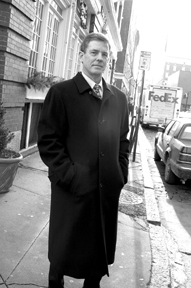
The Providence Plan.
Name: Patrick J. McGuigan
Position: Executive director, since 1995, of The Providence Plan, a
private, nonprofit organization established in 1992 by the mayor’s office in
Providence, the governor and other community leaders, with a mission to develop
and oversee a comprehensive and strategic plan for the revitalization of Providence.
Seifert Systems Invests in Energy Efficiency to Strengthen Operations
For manufacturers, energy is more than just another operating expense. It plays a critical role…
Learn More
Age: 53
Background: More than 10 years with senior management duties for neighborhood
housing and economic development policies and programs for Boston; executive
director of Boston Neighborhood Housing Services from 1983 to 1984; senior member
of the Massachusetts Community Development Finance Corporation staff from 1978
to 1983.
Education: Master’s degree in city and regional planning from the Kennedy
School of Government at Harvard University; bachelor’s degree from Boston College.
Residence: Providence
PBN: What are some of the major goals of The Providence Plan?
McGUIGAN: The six goals that we were founded with, which still have some relevance, were to put people to work, to revitalize the downtown, to make the neighborhoods safe and livable, to build decent affordable housing, to reform the schools and to keep the middle class. But the mission, if you go back and read the founding papers, you would see that it really was to take a comprehensive and long-term perspective on a broad revitalization strategy for the entire city.
You spent more than 10 years in Boston. How do you compare Boston with
Providence, and does our city’s small size help its revitalization?
Boston is the largest city in New England with almost 600,000 people, and we’re now the second largest city in New England with 173,000 people. Boston’s got an extraordinary university base, probably even bigger than Providence. A lot of people come here but we don’t keep as many as we’d like to. I think that Boston has established itself as a pretty progressive city. People want to be there and it attracts people from all over the country and the world. I think that Providence is actually beginning to salvage a similar kind of reputation. I think Providence’s reputation and image in just the last 10 or 15 years has changed pretty dramatically. Providence is a place that is clearly coming back in all sorts of ways. And I think that’s a pretty extraordinary transformation in just 20 years. Something good has happened here.
I think the scale lends at least the impression that we can solve the problem. The other thing is for being such a small place, we don’t feel small. This is a small place that projects bigger than it is. There’s more going on, it’s got more of a set of choices, we’re more cosmopolitan and diverse in all sorts of ways than you would think in a small place. We have the state capital, we have Brown, we have RISD, we have Johnson & Wales, we have a health-centered community, a number of universities and colleges, and we’ve got a housing stock, in terms of architecture, to die for. We’ve got a lot going on. Somehow this place has transformed itself in 20 years from being down-and-out to up-and-coming.
What is the scope of The Providence Plan and what specific areas are you
trying to make a difference in?
One of the major areas is information. We have an extraordinary amount of information on the Web (site) available to anybody and everybody about the Providence neighborhoods, the demographics curve, student enrollment. I don’t think we’d ever say that information by itself is sufficient to make change, but without that information you really are swimming in the dark. The history of the organization over the 10 years has been to be a trusted source of good information.
Given the economic climate, have you found it more difficult to bring in
and raise the money needed to run the organization and its initiatives?
We don’t do individual donors, we don’t do annual campaigns, we don’t ask you to give us money. We write grant proposals, we get funded by the corporate community, the philanthropic community, foundations both locally and nationally, and increasingly we compete for federal dollars and get federal grants. In 2002, we competed for three federal grants, all very competitive, and we got all three and brought in $1.7 million. That’s not typical, but I think as the money dries up – and it is clearly dried up – the importance of collaboration, the importance of partnering with a variety of different people and the importance of being able to show that you’re really making an impact will become more critical.
Have you sat down with Mayor-elect Cicilline yet, and gone over with him
what he’d like to accomplish?
Yes, we have sat down on a couple of occasions. He’s actually asked me to be part of this transition advisory process and to actually lead this effort with a member of his staff called ProvStat. It’s really using data and information to make decisions about city services and it’s holding city services accountable. What the mayor-elect wants to do is use information to make decisions. He wants to create a transparent and open government. He wants issues of accountability to be at the top of the criteria, and in order to have good accountability and good management, you need good data.
For the complete interview, visit our subscription Web site, or call (401) 273-2201, ext. 227 or 234.