PROVIDENCE – The State Labor Relations Board has dismissed a request by the Rhode Island Center for Freedom & Prosperity to delay a child-care unionization vote until the early 2014 return of a U.S. Supreme Court ruling on a related Illinois case.
The board has not yet scheduled the vote, which will determine whether more than 500 state-subsidized child-care providers will accept Service Employees International Union representation, following Gov. Lincoln D. Chafee’s signing in August of legislation allowing such unionization.
Beyond Cash Donations: How New Forms of Giving Are Transforming Not-for-Profit Accounting
Evolving Funding Landscape for Not-for-Profits Not-for-profit organizations are being asked to do more with less,…
Learn More
On Oct. 1, the U.S. Supreme Court announced that it had granted a writ of certiorari in a case that will decide the constitutionality of Illinois Gov. Pat Quinn’s executive order designating 4,500 home-care providers as “public employees,” thus inviting potentially unwelcome petitions from union representatives including the Service Employees International Union.
According to the Center for Freedom & Prosperity, R.I. State Labor Relations Board Administrator Robyn Golden stated “it is also not within the board’s statutory authority to act on your request or any requests of this nature” in a letter dismissing the center’s request for a delay of the Rhode Island unionization vote.
Mike Stenhouse, CEO of the Center for Freedom & Prosperity, criticized the board’s decision on Tuesday as “the epitome of irresponsibility.”
“The highest court in the land has clearly signaled that there may be a constitutional issue with forced unionization,” said Stenhouse in a prepared statement. “It would be totally unfair to child-care providers to conduct an election under this cloud, only to find out in a few months that the entire process may soon be ruled as unconstitutional.”
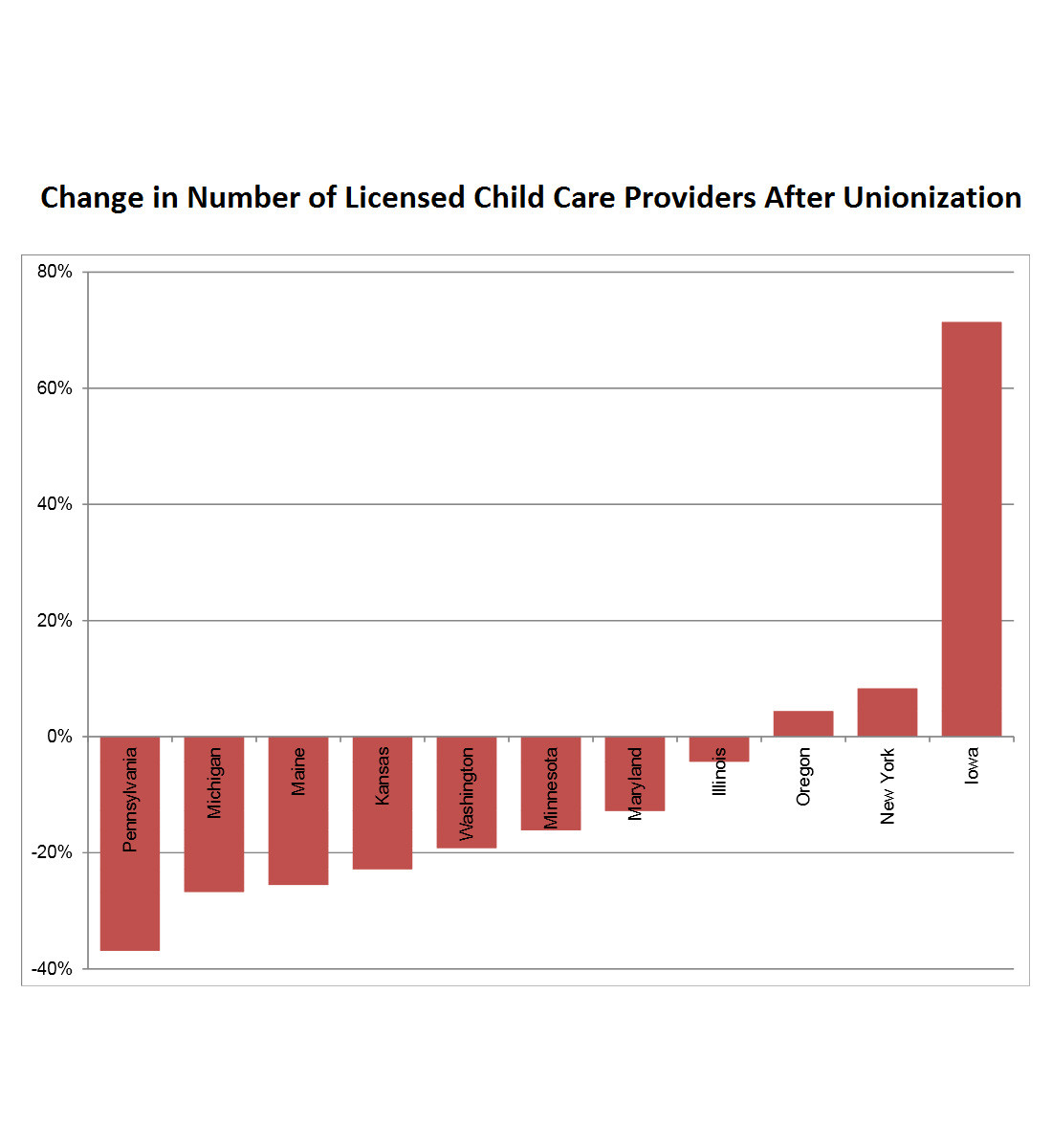
In September, the Center for Freedom & Prosperity published a report highlighting the potential concerns that unionization may raise for taxpayers and home child-care professionals, including the correlation between unionization and decline in child-care services in other states and the taxpayer burden to pay for union benefits.
According to the report, eight of the 11 states for which data is available saw a decrease in the percentage of licensed child-care providers after unionization.