Hoping to garner trust from Internet shoppers, many companies are turning to respected groups to stamp their approval on the companies’ Web sites.
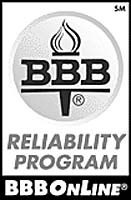
The Better Business Bureau, for example, will put its "Reliability Seal" on a site after the company meets certain criteria about the truthfulness of the site’s claims. Similarly the Better Internet Bureau, based in British Columbia, Canada, lends its orange and blue "quality site" slogan to Internet businesses worldwide that meet its standards.
"Too many customers realize too late that they should have taken the time to research an online company’s reputation and location, advertising claims, customer satisfaction policies, privacy notices and complaint history before doing business with that company," said Charlie Under hill, chief operating officer of BBBOnLine, which is the Council of Better Business Bureau’s online entity.
Seifert Systems Invests in Energy Efficiency to Strengthen Operations
For manufacturers, energy is more than just another operating expense. It plays a critical role…
Learn More
"Other customers, who were savvy enough to gather and verify such information on their own, found the process to be frustrating, time-consuming and cumbersome," he continued. "Either group would benefit by knowing about the BBBOnLine Reliability seal program and learning to click on the symbol from the Better Business Bureau attesting to a Web sites’ trustworthiness."
Jerry Martin, founder and president of the Better Internet Bureau, said the best reason for a Web site owner to sign up with a site like his is to build trust with first-time visitors. With over 3,000 registered members, displaying the BIB logo shows that the owner is among an elite few, he said.
"We turn down approximately 45 percent of all applicants because their site does not meet our guidelines," he said.
While these sites ensure safer business transactions, other organizations make sure sites are suitable for younger Internet users, such as Bala Cynwyd, Pa.’s Web Feet. The Washington D.C.-based Internet Content Rating Association does the same thing, but makes sure kids are able to access pages that have artistic or scientific merit.
The ICRA empowers the public, especially parents, to make informed decisions about electronic media by means of the open and objective labeling of content, said ICRA’s Director of North America Mary Lou Kenny.
"We try to protect children from potentially harmful material; and protect free speech on the Internet," she said. "Technology can’t solve the whole problem. It needs to be attacked by education, public policy and family values. Technology is not the silver bullet."
Using this device, Web authors fill in an online questionnaire describing the content of their site, in terms of what is and isn’t present. ICRA then generates a Content Label (a short piece of computer code) which the author adds to the code of his or her site.
Users, especially parents of young children, can then set their Internet browser to allow or disallow access to Web sites based on the objective information declared in the label and the subjective preferences of the user.
Similar services check for other online criteria. The Center for Applied Special Technology in Peabody, Mass. awards Web pages with a "Bobby Approved" slogan if sites that submit information for review pass tests of handicapped accessibility.
While some sites are decorated like heroic soldiers of the World Wide Web with these logos assuring their safety, morality or accessibility, there are experts who think the displayed accolades are frivolous.
"The site itself has got to have its own integrity," said Carol Baroudi, author of "The Internet for Dummies" and founder of the Baroudi Group in Arlington, Mass.
"It seems like it’s just a branding thing, because if ‘Bobby Approved’ doesn’t mean anything to me before I go to the site, chances are it’s not going to mean anything to me afterwards," she said. "I’m concerned that logos can be copied and pasted. They’re not like a hologram (on a credit card)."
Martin said theft of logos is a threat, but publicizing information such as that could "only encourage more deadbeats to steal logos."
"Theft is not widespread but it harms people who make a purchase believing the site has been approved," he said.
Underhill agreed that seals are most effective when it is a brand users recognize, which is why there are more than 11,000 Web sites that display a BBB logo.
"With almost universal recognition of the Better Business Bureau name, online shoppers have shown an overwhelming acceptance of the seals as trusted guides," he said.
How many more sites use the logo without permission is not known.