Often noted as “the smallest town in the smallest county in the smallest state,” Warren boasts the highest number of food processing licenses in Rhode Island, outpacing even Providence.
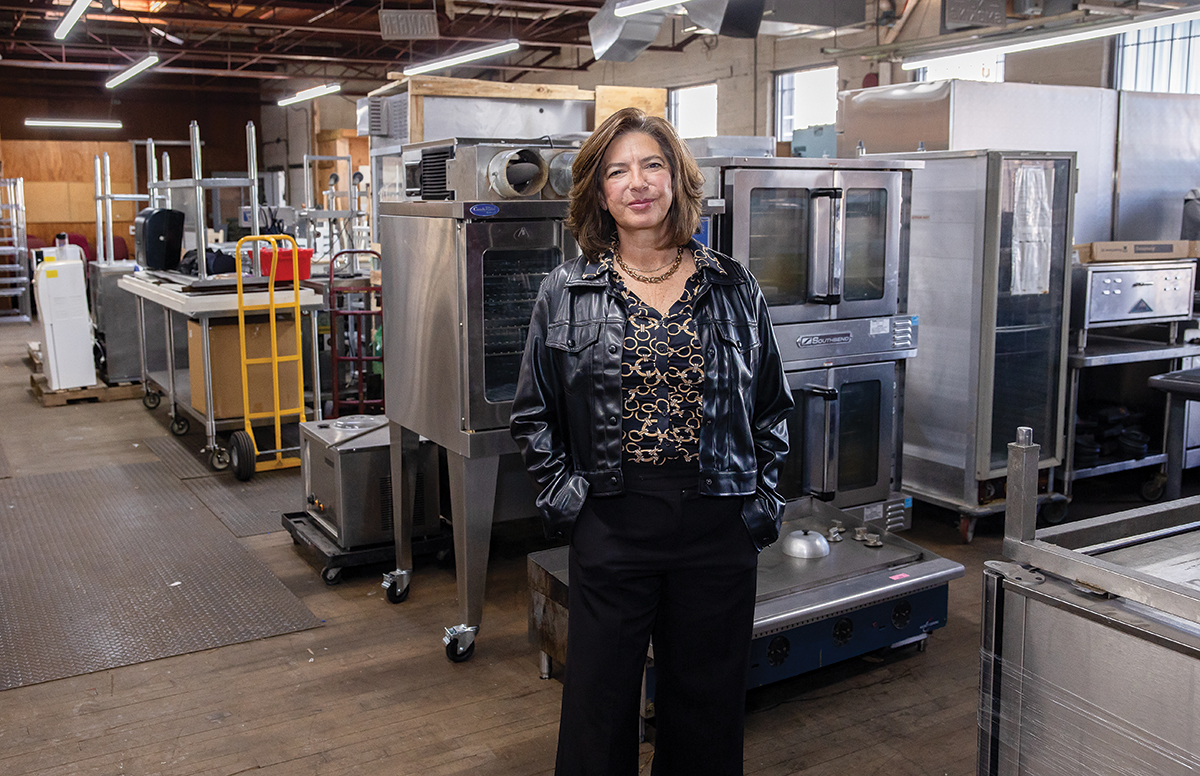
The statistic may seem strange, says Lisa Raiola, founder and president of the food business incubator Hope & Main, but it’s not hard to pinpoint its spark. A quarter of new food businesses in Rhode Island get their start at the nonprofit, which opened its commercial kitchen space in Warren in 2014.
“It just goes to show that having this facility here is very consequential to the Rhode Island economy,” Raiola said.
But with the commissary kitchen space at capacity, and more than half of its food entrepreneurs coming from Providence or a neighboring community, Raiola sees room for the number of new food businesses to skyrocket as the nonprofit prepares to open a second kitchen facility, West End Kitchens, in Providence around June. The approximately $9 million, 40,000-square-foot facility broke ground in November.
While Rhode Island has long been known for its hospitality sector, Raiola says that a decade ago, most people would have attributed that solely to its restaurant scene, rather than food production.
Resources such as Hope & Main’s commercial kitchens expanded that view, Raiola says, but COVID-19 lockdowns also had a role in food entrepreneurship’s explosive popularity.
“These trends of ordering food online and going to pick it up or having it delivered, as well as looking for healthier items, local items, are all trends that stuck,” Raiola said. “And the result of that was that our applications [at Hope & Main] tripled in that time from 2021 to 2023,” surging from about 10 per month to more than 30.
From 2023 to 2025, the food incubator’s number of businesses launched jumped from 36 to 61, with a total of 148 food startups now producing out of the Warren kitchens and another 120 in the pipeline.
Jeff Binczyk, director of Johnson & Wales University’s Larry Friedman Center for Entrepreneurship, says that JWU, already known for its strong culinary programming, has in recent years fielded more students specifically interested in food entrepreneurship.
Though the hospitality industry hasn’t fully rebounded from challenges created by the pandemic, Binczyk says, many entrepreneurs who are starting out, or starting over, have “a desire to learn from those once-in-a-lifetime situations and make their business plans and concepts that much better, tougher, stronger going forward.”
During the lockdown, he says, people also reevaluated their career paths, with many drawn to entrepreneurship. It helped that Rhode Island passed a cottage food law in 2022, which broadens commercialization options of some made-at-home food products. “I think the desire to launch more innovative concepts for food ideas has been stronger than ever,” he said.
For many college students, a licensed commercial kitchen is out of reach financially, Binczyk says. But entrepreneurs who can’t afford that access have options such as selling at farmers markets, which can serve as a launch pad while they adjust their business plans and products, potentially moving on to a commercial kitchen at a later point.
Other resources for food entrepreneurs, including additional commissaries, have opened in recent years.
Branchfood, a Boston nonprofit, expanded to Rhode Island in 2022 and supports stage-two food businesses with resources such as curated event lists, investor connections, shared workspaces and other advisory services.
That same year, Green Line Apothecary LLC co-founder Kenneth Procaccianti launched the Town Made commercial kitchen space in South Kingstown.
Procaccianti conceptualized Town Made LLC as he sought to fulfill his own entrepreneurial needs. He began making ice cream as just one product available at Green Line Apothecary, a throwback pharmacy and soda fountain. But last year, he and his wife, co-founder Christina Procaccianti, pivoted to focus solely on ice cream production and sales.
But in South County, kitchen resources weren’t so rich.
“We not only have started a food brand from scratch,” Procaccianti said. “We built the facility to do it as well.”
The Procacciantis soon confirmed that they weren’t the only locals in need of such a resource. Though much smaller in size than Hope & Main, with about 10 businesses actively operating out of the commissary, the kitchen and its clientele have already made a mark on the area.
Town Made members have ranged from early-stage startups to established businesses. The celebrated Matunuck Oyster Bar, for instance, has been using the facility since a fire damaged the restaurant last year.
Meanwhile, Gansett Craft Chocolate LLC got its start making chocolate in the Town Made kitchens. The business went on to win international accolades and now has its own brick-and-mortar shop in the Wakefield section of South Kingstown. “Our kitchen, Hope & Main, what we’re all trying to do is provide the foundation, those initial building blocks on which entrepreneurs can build permanent, sustainable food businesses,” Procaccianti said.