Boutique owner Karen Beebe spent weeks trying to hire just one extra person ahead of this year’s holiday shopping season.
For 19 years, Beebe’s shop,
Queen of Hearts LLC, has sold handmade clothing and fashion items from a storefront on Westminster Street in downtown Providence. As with all retailers, the stretch between Thanksgiving and Christmas is crucial, a rush of sales that requires her to bring on more help.
But midway through December, she was still one full-time employee down.
“I had multiple interviews scheduled, and several of them ended in no-shows,” she said. “I really didn’t find anyone new this season.”
Instead, she’s relying on a former employee who happened to be home from college to fill in when needed on a part-time basis.
“This is our busiest time of year, and it’s so important that we have enough people to provide the level of customer service we pride ourselves on,” Beebe said.
For retailers, the Christmas shopping season can cut both ways. There’s the cash windfall of sales at the end of the year that often can boost businesses into the black. But that rush of customers also comes with headaches, including getting the right amount of help to make it through those weeks in December and early January.
This year, uncertainty surrounding the economy hasn’t made those holiday hiring decisions easy, and neither have evolving demographics and changing priorities among workers who are looking for more flexible scheduling, according to those who study the labor market.
Indeed, the weeks in November and December have long been the peak employment window for retailers, but that hiring surge has been muted this year.
While big-box retailers such as Target Corp. and Walmart Inc. have proceeded with hiring additional seasonal help, there have been hints of caution.
For instance, Target has acknowledged offering additional hours to current employees, then tapping into a pool of another 43,000 employees – dubbed the “on-demand” team – who are available to pick up shifts that fit into their schedule.
U.S. retailers were projected to hire 265,000–365,000 seasonal workers, down from 442,000 in 2024, according to the National Retail Federation.
Industry observers say the restraint is in part the results of factors such as tariffs, declining consumer confidence and a lack of government economic data that helps inform hiring decisions.
And a new November survey from Resume.org, a career and job-search research firm, found that one in three U.S. business leaders plan to carry out layoffs this holiday season, with most cuts expected between Thanksgiving and Christmas.
Cost-cutting ahead of the new financial quarter was cited by 74% of respondents as the primary driver.
But even as more people lose jobs nationally, the staffing pinch persists for some retailers, said Ramesh Mohan, a professor of economic analytics at Bryant University.
“The retail industry itself has changed,” Mohan said. “Even when layoffs rise nationally, the people losing jobs aren’t necessarily willing to take traditional retail shifts, which is why higher unemployment hasn’t eased hiring pressures for stores.”
The result is a labor mismatch that leaves smaller, independent retailers such as Queen of Hearts struggling to add even a single seasonal employee.
SHIFTING MARKET
Elsewhere, different dynamics are at play.
Asher Schofield has filled more than a half-dozen positions in recent weeks at Frog and Toad LLC, the quirky gift and novelty shop he co-owns in Providence. Most of the jobs offered full-time hours, and there was no shortage of applicants.
“I was actually having a difficult time narrowing down choices,” he said. “We had super-qualified applicants.”
The problem: Schofield found many prospective employees were looking for part-time work to fill out their available hours around other gigs.
“Most of the applicants only wanted shifts capped at three days per week,” he said. “Folks usually want full time, but that definitely wasn’t the case this year. It’s a bit strange.”
His experience this season points to a new pattern that the R.I. Department of Labor and Training has noted anecdotally: More applicants want shorter, more flexible schedules even when the employer is willing to offer more hours.
In Schofield’s case, he said applicants already had other part-time jobs such as driving for web-based ride-hailing services and wanted to beef up their income at a time when the economy feels unsettled for many.
Another change in the labor market: fewer teens. The labor pressures some retailers are experiencing right now aren’t just seasonal – they’re structural, observers say.
DLT spokesperson Edwine Paul says retailers headed into the holiday season are “facing serious staffing challenges,” driven partially by a continued erosion of the youth labor pool.
Just 36.1% of Rhode Islanders ages 16 to 19 participated in the labor force over the past 12 months, according to DLT data, a sharp drop from nearly 48% a decade ago.
And, statewide, there are fewer teens now to take these jobs than there were in previous years, according to Mohan.
“Rhode Island had nearly 56,800 teens a decade ago, but now it’s closer to 47,800,” Mohan said. “That smaller cohort alone mechanically reduces the pool of potential entry-level retail workers.”
Meanwhile, Mohan notes that cultural and educational priorities are limiting teen participation in the labor market.
“Today’s teens place more emphasis on internships, academic work and mental well-being, and many prefer flexible or low-friction jobs like gig work rather than traditional retail,” Mohan said.
Steven Lombardi, executive director of the East Greenwich Chamber of Commerce, said his organization – which has more than 400 members, including 34 shopping and specialty retailers – is seeing a shift in job applicants.
“Some of these positions are now being filled by more experienced, older applicants who are familiar with this type of work,” he said. “Retailers are seeing a more mixed bag of candidates than in the past, when the majority were teens or early 20s.”
EARLY HIRING
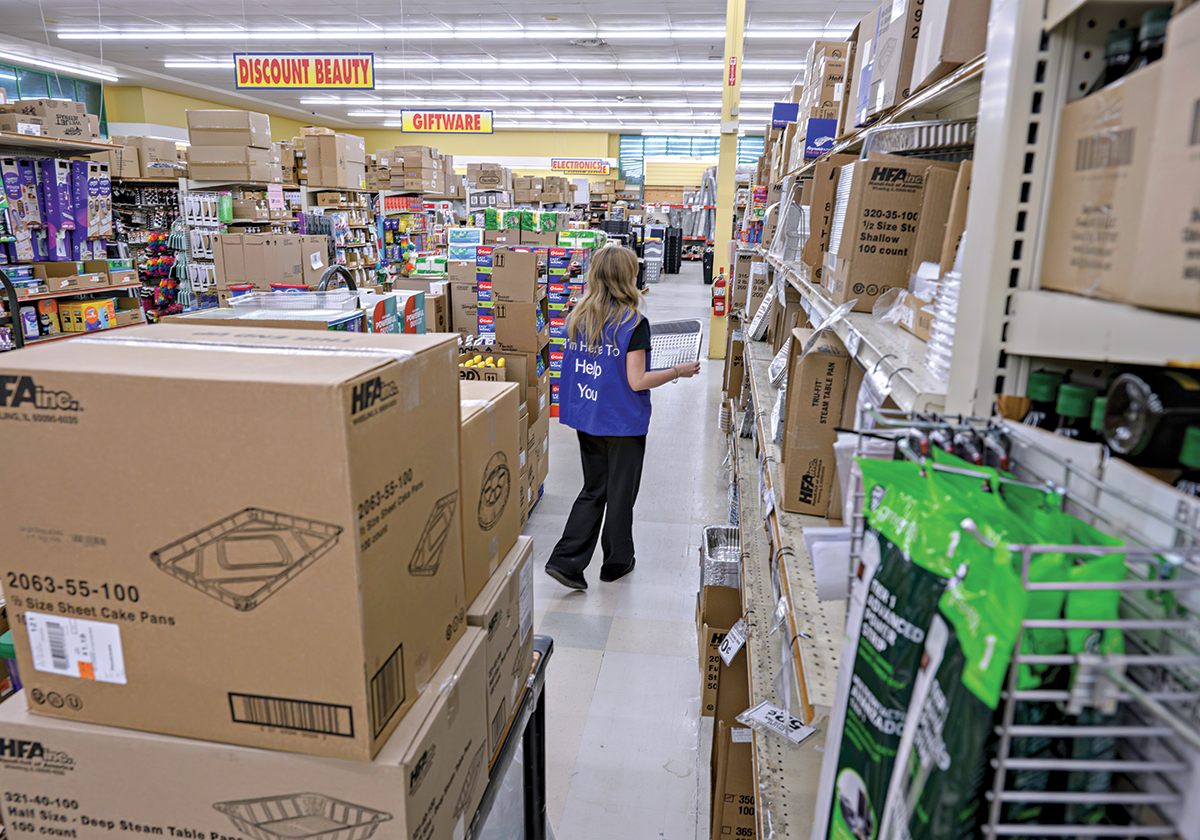
Ocean State Job Lot Inc. has been keeping a close eye on the job market, and uncertainty led to a change in its hiring approach before the holiday season.
The state’s largest homegrown retailer has been expanding steadily – from nearly 160 stores a few years ago to 176 across the Northeast and mid-Atlantic in 2025 – and each new location can add up to 70 positions, including seasonal roles.
But as one of Rhode Island’s largest retail employers, with roughly 1,650 local staff members among nearly 7,000 companywide, the privately held, family-run discount chain is in competition with other big-box stores in the area.
This year, the company hosted a chainwide hiring event in October instead of waiting another month, according to Lisa Pereira, senior retail talent acquisition manager.
Typical staffing levels range from two to five seasonal temps per store, Pereira says.
“Getting out earlier this year did help us fill the majority of our seasonal roles ahead of the peak rush,” Pereira said. “We tried to get ahead and get these hires in beforehand.”
While most seasonal hiring was complete as of early December, she said a few roles remained open to cover last-minute attrition or adjustments.
MISSING DATA
This year brings a further complication: key federal data used to track seasonal retail hiring has been delayed or disrupted.
The U.S. Bureau of Labor Statistics suspended much of its reporting during the recent government shutdown, leaving national and state employment figures incomplete, according to the DLT.
In 2025, Rhode Island’s unemployment rate has remained in the mid- to upper-4%, generally considered consistent with a healthy labor market, although higher than the tight conditions in 2021-2023. Still, the numbers for October and November have not been released.
And Paul says some holiday-hiring trends in general are difficult to analyze because the federal datasets don’t define a “holiday season” or track real-time starting wages or incentive packages.
That means the best evidence comes from longer-term structural indicators – such as teen participation rates, job postings and unemployment claims – rather than precise year-over-year seasonal counts, Paul says.
With so much uncertainty in the data, retailers are left to read the market in real time – balancing schedules, wages and staffing needs as best they can.
The lessons learned this season will likely shape hiring strategies in the future, according to Mohan.
“This holiday-season staffing crunch is not temporary,” he said. “Rhode Island retailers will likely continue to face these constraints well beyond this season unless they adapt through higher wages, more flexible scheduling, or greater use of automation.”
The chains may be holding back on hiring at the moment, but they’re still raising pay, and rethinking schedules and other benefits.
Retail wages have climbed: Employers across the country are now offering $16–$20 per hour, roughly 20%–25% higher than pre-pandemic holiday rates, according to BLS wage data.
Many retailers are adding same-day pay, bonuses and highly flexible scheduling in part to compete with hospitality, delivery and gig platforms, the data shows.
At Queen of Hearts, it’s tough for the boutique to keep up with those types of offerings. Even without the frills, hiring is a big commitment for Beebe.
“Training new people is very time-consuming and costly,” she said, “which adds another layer to all of this.”
Lombardi says he’s noticed the same thing with retailers in East Greenwich.
“Hiring someone is an investment,” he said. “For very small retailers, affordability is a real concern.”
Another concern: The desire of workers to have more control over their scheduling.
A 2024 survey from Internet Collaborative Information Management Systems, a hiring and recruiting software company, found that 72% of adults applying for seasonal retail or transportation jobs preferred part-time schedules over full time, citing flexibility and control over their hours.
Lombardi says the use of “flex time” in some sectors – giving employees some control over their schedule – seemed to really take hold with remote work during the COVID-19 pandemic, when the country was at nearly full employment and workers could use it to their advantage.
But being flexible is more difficult in retail.
“There’s definitely a shift in work culture – people want as much flexibility as possible,” Lombardi said. “Retailers have had to figure out how to adjust, and while they’ve developed some strategies, the labor [market hasn’t returned] to pre-COVID levels. Add affordability issues, and you’ve got two major challenges they’re still managing.”
It’s been tricky for Ocean State Job Lot.
While the company says it has enjoyed “robust candidate flow,” Pereira emphasizes that meeting workers’ desire for more flexible scheduling remains a challenge.
“Like many companies, we need people working nights and weekends. Sometimes the availability of our candidates doesn’t always align with what we’re looking for,” she said.
Still, Ocean State Job Lot has been able to work around those limits and keep its stores staffed, showing how careful planning can soften hiring struggles.
For Beebe, these labor trends show up most clearly in what she’s unable to offer customers when she’s still short a key seasonal hire at Queen of Hearts.
“It’s impacting our ability to do the things we value as a small business, like offering more complimentary gift wrapping, more customer service, things like that,” she said. “And being short-staffed makes that very challenging.”
For now, retailers such as Beebe are managing the holiday rush with what they have.
“We just have to push through and do what we can,” she said.
[gallery link="file" size="medium" td_select_gallery_slide="slide" ids="512255,512256,512257"]