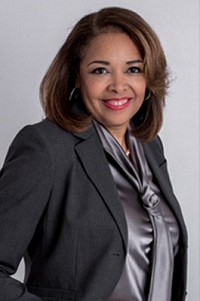
Angela Dixon was recently named chief diversity officer for Berkshire Bank. She has 30 years of experience in human resources and diversity and inclusion work, including through her own management consulting firm, as well as positions with the Capital Region Chamber of Commerce in Albany, N.Y., and the New York State Comptroller’s Office.
Dixon has a bachelor’s degree in political science and a master’s in business administration from the State University of New York at Albany.
Your Business Has Gone Global. Has Your Insurance?
A decade ago, “doing business internationally” was mostly a large-company concern. Today, a manufacturer in…
Learn More
PBN: What does your new role with the bank entail?
DIXON: In this role, I will be driving the company’s diversity, equity and inclusion strategy in collaboration with executive management and each of Berkshire’s business lines. I will also be working to enhance Berkshire’s existing diversity programs’ impact and maximize our exposure.
PBN: Diversity can mean a lot of things to different people: racial, religious, socioeconomic, in policy or education or funding, etc. How exactly would you define diversity in terms of your position and focus?
DIXON: As a purpose-driven community bank, first and foremost, Berkshire is focused on being responsive to the community, ensuring high-quality customer service, stakeholder engagement and, ultimately, shareholder value.
Berkshire must be reflective of the customers and communities it serves. Since our communities are diverse, there is no one simple answer to this question. In fact, it can be all of the above. It is important to define diversity, consistent with the mission and the goals we seek to accomplish. For example, women represent 68% of the current workforce; however, minorities represent only 14%. There is an opportunity to increase the minority representation, so this will be one of several focus areas.
Our customers also have diverse needs, from homeownership to access to business loans and other banking and financial services. Here we will be working to ensure greater accessibility and support for small and women and minority-owned businesses.
PBN: What are your top goals within the next year?
DIXON: Working with executive management across all business lines to critically assess where we are now and what goals we want to achieve over the next 18-24-month period will be a top priority. It is critically important that the diversity, equity and inclusion approach is in alignment with the company’s strategic priorities.
PBN: What do you see as the biggest shortcomings or areas that need attention in terms of diversity and racial equity within the industry generally?
DIXON: It is easy to see that Berkshire Bank has done a lot in the past several years to enhance its presence in the diversity and inclusion space significantly. This past year has been like no other and has been especially difficult for BIPOC (Black, Indigenous and people of color) and other marginalized communities. Yet, Berkshire did not lose sight of its work. The company provided diversity training for its employees. It established several employee resource groups, including a People of Color/Multi-Cultural ERG, LGBTQ+ ERG and a Power of Women ERG, providing a forum of ongoing support. Berkshire has taken a creative approach to meet diverse populations’ financial services needs through such programs as MyCheck, a check-cashing service, and Reevx Labs, supporting entrepreneurs and artists.
According to the Federal Reserve, 22% of American adults either unbanked or underbanked, meaning they either don’t have a bank account, or have an account but still use an alternative, and often predatory financial services. Additionally, through its philanthropic efforts, Berkshire continues to focus on supporting organizations that also focus on furthering diversity, equity and inclusion.
PBN: How have the events of the last year, including the Black Lives Matter movement and the pandemic’s disproportionate impact on people of color, informed your focus and direction for the bank?
DIXON: Several significant events in 2020 converged to create a sense of urgency that I had not seen in previous years. The importance of the business community in supporting racial and social justice has been critically important. Like Berkshire, most are looking for opportunities to have a tangible and measurable impact in undoing systemic racism in traditionally marginalized communities. The strength and resilience of our economy depend on it.
Our purpose at Berkshire Bank is to empower the financial potential of people, families and businesses in our communities. Having a purpose-driven diversity, equity and inclusion initiative is just one of the ways we will achieve this goal. All that being said, it remains imperative that we continue to educate ourselves, our employees and leadership on the issues of racial and social justice and continue to raise awareness on the impact of bias, conscious and unconscious, bigotry and racism.
Nancy Lavin is a PBN staff writer. You may reach her at Lavin@PBN.com.
Correction: The first paragraph of an earlier version of this article misidentified part of Angela Dixon’s experience. Her 30 years of experience includes diversity and inclusion work.