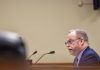
Ryan Lax is president of Lax & Co., a financial-planning and advisory firm in Warwick. He has been in the insurance and investment industry for more than 12 years. In 2008, he partnered with Halperin & Co., creating Halperin & Lax LLC. In 2013, Lax acquired the Halperin partnership of the business and merged with his father’s business, Marvin William Lax & Co. to establish Lax & Co.
Ryan Lax, a registered financial consultant, specializes in assisting small-business owners, executives, retirees and their families. He is an active member of the Rhode Island Estate Planning Council and the National Association of Insurance and Financial Advisors. He is an owner of Lion Street, a privately held, adviser-owned life insurance distribution company based in Austin, Texas. He is a registered representative of New York-based Cadaret, Grant & Co., an independent investments broker and dealer firm. In addition, he is a supporter of The Tomorrow Fund, a Rhode Island organization that supports families of children diagnosed with cancer.
For Leaders Who Don't Have Time to Get Sick
Top performers guard their calendars, delegate relentlessly and optimize every hour of the day. Health,…
Learn More
PBN: In the aftermath of the 2008 financial crisis that left the big Wall Street financial-services firms reeling, how has that impacted small, local firms such as yours in the years since?
LAX: Being a smaller, more boutique firm allowed us to be nimble when changes were necessary for our clients. We have been very fortunate to have strong relationships with our clients and it’s truly the backbone of what we do.
I would love to tell you that we were completely immune, but we have definitely come out of the crisis stronger. Not just stronger in our knowledge of how to handle crises [such as] the one our country saw but also stronger in the trust we share with our client base.
PBN: A recent report in Banker & Tradesman stated that 94 percent of financial-services firms experienced some sort of fraud in the past two years. How does a small firm such as yours protect itself?
LAX: The kinds of fraud listed in the article: identity theft, synthetic identity fraud, and account takeover are the new “bonded vault heists” of the 21st century. Criminals get a little smarter every day and we do our best to stay a step ahead.
Our office is extremely private, as we do not share space and we treat client information as securely as a bank would treat its cash reserves. All info is under lock and key, both physically and digitally. Ultimately, our clients have trusted us with so much more than just their monetary assets, and we want to be sure that we are handling that with the utmost care.
The types of fraud stated above are from the study completed by TransUnion, which is referenced in the article. I want readers to know that it’s not Madoff [in-house] fraud. It’s identity theft that the study references.
PBN: From your perspective, have investment conditions been more favorable under the Obama administration or the Trump administration, and how much do you attribute that to actions of the federal government versus external factors?
LAX: The [Standard and Poor’s stock index of 500 leading companies] is up 73 percent over the past five years and, in all fairness, that overlaps both administrations.
The current indicators, including a five-year high in consumer confidence and a five-year low in the unemployment rate, definitely lend themselves to strong investment conditions right now. The current administration seems to have these factors on the front burner and hopefully these conditions will continue.
PBN: Which aspect of the financial-planning industry is growing fastest and why?
LAX: Advisory services are, by far, the fastest-growing part of our business, with managed account assets growing 207 percent so far this year. This is where clients pay a fee equal to a small percentage of their assets under management, for advice and service. Rather than paying commissions and loads combined with internal expenses on mutual funds, a client has more transparency to the costs associated with their portfolio.
This platform also provides better accountability because if the client makes more money, the firm shares in that. There is also increased fiduciary responsibility for the adviser.
PBN: Your firm’s website mentions that the use of trusts as “a creative way” to encourage certain desired behaviors in trust beneficiaries is becoming more common. What are your thoughts on that?
LAX: We work closely with several estate attorneys, as well as [certified public accountants]. There are many tax advantages to working with trusts. Our firm puts many life insurance policies, as well as assets, into trusts to take advantage of the tax benefits and protect the families we are working with. This helps our clients plan not just for today but for the future beyond their own lives.
The use of trusts allows a client to guide how their savings will be used after they are gone. It isn’t just about having your beneficiaries behave a certain way but also being sure that your hard work throughout your life is reflected in an appropriate legacy after you’re gone.
Scott Blake is a PBN staff writer. Email him at Blake@PBN.com.