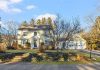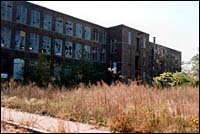
Providence is a Brownfields
site now being remediated.
By a unanimous vote earlier this summer, the U.S. Senate passed legislation that would substantially increase the annual funding for Brownfields and extend protection from legal and financial liabilities to innocent property-owners and developers who undertake cleanup projects.
Brownfields legislation is currently the top priority of the National Association of Realtors.
Seifert Systems Invests in Energy Efficiency to Strengthen Operations
For manufacturers, energy is more than just another operating expense. It plays a critical role…
Learn More
John Lynch, a commercial Realtor from Cleveland, urged Congress to pass legislation to help the real estate industry to effectively clean up and redevelop hundreds of thousands of Brownfields sites throughout the country. He said that legislation must first provide Superfund liability protection for innocent landowners and prospective purchasers “who have not caused or contributed to hazardous waste contamination.”
“Secondly, Brownfields legislation must recognize successful cleanups conducted under state Brownfields programs,” said Lynch. “Unfortunately, there is no guarantee that the federal EPA will not assert authority at a future date and require additional cleanup. Without some degree of certainty that they are protected from federal, as well as state liability, owners and developers are reluctant to undertake development of contaminated sites.”
In other news from the NAR, the association projects that net absorption in the retail sector will slow through the fourth quarter, with total absorption this year at 43 million square feet. The vacancy rate in 54 markets tracked is expected to rise to 10.3 percent by the end of the year. Retail rents are expected to rise an inflation-adjusted 1.7 percent in 2001.
In the lodging market, reduced business travel has slowed the demand for hotel rooms in the 54 markets tracked. NAR reports demand increased 2.6 percent during the first quarter, about half of the 5.0 percent pace in the fourth quarter.
The room occupancy rate slipped to 59.1 percent in the first quarter from 59.3 percent a year ago. At the same time, average daily room rates rose 3.7 percent. Revenue per available room grew by 3.4 percent in the first quarter.
NAR expects continued weakness in the lodging market, but a general economic recovery in the second half of the year should help to bolster the sector. Lodging demand increases are expected to trail supply growth.
(Photo, H. Johnson)