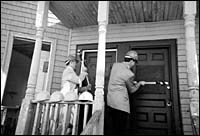
sledgehammers to a Smith Hill
tenement.
An infusion of city and state dollars and the creation of new programs have brought new life to Providence public housing and development programs.
Recent developments include a $50 million neighborhood improvement appropriations ordinance signed by Providence Mayor Vincent A. Cianci, Jr. and a $46.5 million Rhode Island Housing program to make way for affordable apartments. Cianci also recently unveiled a mill revitalization program for the city.
Beyond Cash Donations: How New Forms of Giving Are Transforming Not-for-Profit Accounting
Evolving Funding Landscape for Not-for-Profits Not-for-profit organizations are being asked to do more with less,…
Learn More
The mayor last week signed into law an ordinance appropriating $50 million in bonds for neighborhood improvements. Cianci said $2.2 million has been dedicated to each of Providence’s 15 wards, with funds directed toward particular needs of each area.
An additional $12.98 million will finance special projects with citywide significance, such as $4 million being dedicated to lead abatement and housing renovations in the city.
Cianci said the funds will be dedicated “to a number of special projects and initiatives that will ensure the continued growth of our city by addressing a number of vitally important issues ranging from business incubation, new walking paths, the renewal of neighborhood shopping districts and lead abatement.”
For more specific allocations of the funding, visit www.pbn.com.
Another project begun was a part of the $46.5 million Rhode Island Housing Neighborhood Opportunities Program. State lawmakers and housing officials kicked off the program by whacking a rundown Smith Hill tenement house with sledgehammers. The program will create 1,900 apartments targeting low-wage working families.
The development at 56 Goddard St. is sponsored by the Smith Hill Community Development Corporation, which had already invested over $3 million along Goddard Street. The Smith Hill Development Corporation received $145,000 from Rhode Island Housing, $50,000 in HOME funds from the city of Providence and a $90,000 loan from Citizens Bank.
“It was really the last substandard house on Goddard Street,” said Ed Neubauer, executive director of the Smith Hill Community Development Corporation.
Neubauer said progress can only be made one house at a time, but “this was the last worst house in what was probably one of the worst areas.”
Smith Hill CDC will manage the properties, and Travelers Aid’s Operation Crossroads program will supply the tenants. One of the stipulations is that the rental income is always 30 percent of the Rhode Island median income, which means tenants will pay no more than $200 per month upon moving in. And Travelers Aid pays a fair market rate rent to Smith Hill CDC from a government grant.
“It’s a guaranteed subsidy to make up the difference in their rent payments and our operational costs,” said Neubauer. “It really makes the program work.”
Cianci’s mill program also looks at rehabilitating older buildings– in this case, much older buildings. By developing incentives and zoning changes the mayor’s program hopes to create a new citywide “landmark district.” Owners of buildings awarded the landmark status will be eligible for certain loans including a tax-stabilization plan and a state tax credit of 30 percent.
The mayor said a landmarked building could be defined as a structure that possesses historical significance and is “worthy of protection from demolition or inappropriate changes.”
Those inappropriate changes are ones that make the building incompatible with “the historic and architectural character that qualified it for landmark status.”
Cianci said landmarked buildings don’t necessarily have to be turned into live/work space, but if an owner wants to rehabilitate the building the city will help. The owner, though, must go before the Historic District Commission first.
Raphael Lyon, a spokesperson for the Providence Mill Building Association, said if the program is passed into law, the mission of his association will be fulfilled.
“It could be great if the city actually takes a role in not only advertising these buildings, but also changing the public’s perception of their value,” he said. “That’s the role of our leaders, to see bigger and brighter things, and I feel like that’s possible.”
“I think if I have any regrets at all, it’s that this whole movement happened a year too late,” he said, referring to the dozen or so buildings which will be destroyed to move Route 195.
Among the Neighborhood Improvement Bond allocations approved were: