R.I. Local Initiatives Support Corporation.
Community housing group sees return on neighborhood investment
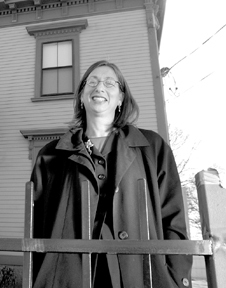
Barbara Fields Karlin
Beyond Cash Donations: How New Forms of Giving Are Transforming Not-for-Profit Accounting
Evolving Funding Landscape for Not-for-Profits Not-for-profit organizations are being asked to do more with less,…
Learn More
Position: Senior program director of the Rhode Island Local
Initiatives Support Corporation, located in Providence
Background: Has headed up the LISC office since the national organization
first opened a local location in 1991. Prior to that, Fields Karlin worked at
the Massachusetts Government Land Bank as a project manager for five years and
for the Boston Redevelopment Authority as an analyst for two years. She also
spent several years as the executive director for the World Information Service
on Energy located in Washington, D.C.
Education: Bachelor’s degree from Tufts University; Master’s in city
planning from the Massachusetts Institute of Technology
Age: 46
Residence: Providence
The Local Initiatives Support Corporation is a national organization founded
in 1980 by the Ford Foundation and six major corporations as a $10 million experiment
to see how best to stem the tide of dis-investment in low-income neighborhoods
and major urban cities. Since 1991, the group’s Rhode Island office, the 27th
office to open in a decentralization effort, has invested $18.5 million in grants
and loans and, through the National Equity Fund, more than $96 million in equity.
Those investments have helped to create 2,800 new units of affordable housing,
more than 250,000 square feet of commercial and community space and new child-care
facilities for more than 1,300 children.
Rhode Island LISC just launched a community safety initiative linking organizations
with police in targeted neighborhoods in Providence, Pawtucket and Woonsocket
and has also been tackling the creation of quality day-care facilities in recent
years.
Q. Can you talk about the basic concept of LISC and why the group
actively looks to engage community development corporations?
A. The idea around LISC was very simple, we would provide low-market
financing and technical know-how to help community-based organizations rebuild
low-income neighborhoods. We look to work with four sectors in the community
– community-based organizations, they’re our primary client, our borrower who
we call CDCs, the community development corporations. Then we work with the
government at different levels – federal, state and local, because while we
are a slice of the pie providing that upfront, high-risk venture capital to
get a project going and an architect hired, government still provides a big
piece. But what we are also about is engaging the private sector and that’s
both philanthropy and the foundation world … here it’s the Rhode Island Foundation
in the lead and corporations. We have broad-based corporate support which has
really been very important and Rhode Island distinguishes itself by the tremendous
support from the banks … We look to the CDCs to support with training or funds,
because it’s the devotion and the ideas of those groups who are a key part of
improving and rebuilding neighborhoods.
Q. Aside from the real estate work LISC has done, what else has your group
brought to these local community groups?
A. We believe that the real estate and the housing is the starting
point and not the end point. Our major focus is in the real estate because we
believe it is a uniquely powerful tool in changing a neighborhood. Another thing
we like to stress is that every group we finance is a nonprofit, but all the
housing and commercial property they build gets taxed. They’re taking abandoned,
derelict properties that are magnets for crime and turning them into tax-revenue
producing properties. … We don’t just invest in the real estate. We invest
in training their board and staff, looking at their technology, making sure
they have the right hardware and software, and the correct training to use that.
And we look at their strategic planning. One of the things I like to say is
that we like to bring business discipline to the community nonprofits. …
Q. It sounds like a lot of bringing the right CDC to the right people to
get the financing they need.
A. We’re a funny mix between a foundation and a bank. What people
don’t get is that one of those main functions of LISC is to take communities
that have been disconnected from the mainstream and reconnect them. … One of
the things that corporate Rhode Island realizes, is that when they fund at LISC,
they are bringing in the resources at national LISC, not just the monies we
raise locally. I think if you were to talk to our big funders, whether that
be Fleet or Textron, they would say, ‘This is one of best-leveraged investments
I could make in Rhode Island, to improve the quality of life here.’ They put
a dollar on the table and LISC is bringing in five, six, seven dollars to Rhode
Island. … We’re an intermediary, because we say the same things to the CDCs,
‘If you’re performing, we will reward success.’
Q. What other programs have you added over the years?
A. We’ve been running a national AmeriCorps program, we’ve placed about
60 AmeriCorps members throughout the state, and about one-third of our members
have either been hired by the CDC that sponsored them, or another nonprofit
in the community. We want them to see what the job is like. … We’re introducing
young people, and sometimes not-so-young people into the field and many of them
are saying after a year or two of service, ‘I want to stay in this.’ Some have
gone on for additional training and come back. … Two and a half years ago we
also launched a child-care facilities program that was developed because there
was a tremendous opportunity to take advantage of a public investment that would
be met by the private sector. … One of the best marriages, in my opinion, is
down in Newport where a CDC we’ve worked with and has been there for over 30
years built the child care at the new Headstart program and the folks at Headstart
are running it. The CDC knew about sewer lines, asbestos removal, dealing with
the contractors, dealing with financing. And the Headstart people knew about
early intervention. And today you have a terrific facility on a site that was
formerly Navy housing in a neighborhood that is surrounded by a lot of affordable
and subdivided apartments.
Q. What steps would you like to see the state Legislature take?
A. I think a big step forward was taken when the Neighborhood Opportunities
Program was started, and we’re working really hard to keep that $5 million in
the budget. I believe that $5 million should be a starting point and not an
end point of discussion. The state is facing some very tough decisions because
of the budget, but if you look at neighboring states, they’re investing a lot
more per capita. … We are urging this year the passage of a bill we introduced
through Cities Count last year, and working with the Rhode Island Technology
Council, to put an investment in these organizations in their technology capacities,
in their community leaders. Even in these tough times, we think a small investment
would make a big statement that they understand these groups need that and we
can provide a vehicle to leverage their investment against private sector investment.
Q. What message would you like to offer to the business community?
A. In this next year, we’re going to be looking to hopefully re-engage
some of the bigger companies that we’ve lost touch with over the years and over
the different managers and owners, but we’re also hoping to re-engage some of
the smaller and mid-size businesses. There are a lot of important things to
fund out there, from children’s issues, to health care issues, to education,
but we’re asking them to come on board with us. … The problem is big, we’re
saying let’s chop off this little piece. The private groups and the nonprofit
groups can come together to the table with LISC as the intermediary. We are
trusted to not be an entitlement program. So we get to say yes and we get to
say no. And we do both. It’s about building that partnership and I think it’s
really created an environment here that’s very different.
Q. What are the biggest changes LISC has seen in Rhode Island and what
accomplishments are you proudest of?
A. First and foremost, we have changed the playing field, so that
the CDCs themselves are part of the equation when people talk about addressing
housing, neighborhood revitalization, community development. These groups are
seen as credible and that they can deliver results. … The second thing that
I’m really proud of is the fact that the CDCs have really grown into strong
organizations and groups that were once two employees, now have six or seven
employees and they’re actually producing housing. That adds up to a big difference.
If you drive into South Providence between Broad Street and the hospital, you
will see a different neighborhood. You will go down street by street and see
freshly painted homes, reclaimed abandoned properties back on the tax rolls.
The whole issue is that we cannot solve all the problems so we need to target
our resources. … So for me, the concentrated efforts across the entire state
are starting to pay off. The banks are now knocking on the doors of the CDCs
asking, ‘How can we work with you?’ as opposed to us begging the banks to stay
on the table and work with these groups. … Putting this issue front and center
was so key. The other thing I’m proud of is our investors from Fleet Bank to
Rhode Island Foundation to Textron have stayed at the table and realized the
dis-investment in our communities happened over decades and that LISC was not
about a three- or five-year hit. I applaud all of my investors for having that
kind of patience and knowing that we’ve still got work to do.