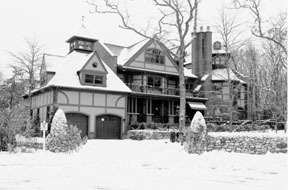
this Lincoln house, listed at $1.7 million.
Sales of elite homes slow
High-priced homes in Lincoln are starting to feel the slowdown of the real estate boom, according to local real estate agents who have listings in the town.
According to JoAnne Samborsky, a realtor with Keller Williams Realty for more than 15 years, buyers are becoming wary of investing in million-dollar homes, and the lack of “entry-level” homes is limiting the scope of homebuyers.
Seifert Systems Invests in Energy Efficiency to Strengthen Operations
For manufacturers, energy is more than just another operating expense. It plays a critical role…
Learn More
“In Lincoln, the entry-level homes dictate the market,” the Realtor said. “When you have fewer entry-level homes, it doesn’t perpetuate the market.”
Because the homes in Lincoln would not be characterized as homes suitable for first-time buyers, Samborsky said the limited assortment makes it harder for first-time buyers to sell a house and move on to a larger one. If they can’t afford a first home in Lincoln, they go elsewhere. The result is that real estate agents must seek first-time buyers who can actually afford a $525,000 home, which limits the demographics in the town.
“It’s been like that for a while,” she said. “Most of the new construction is even high-end. There’s going to be a certain element [affecting] demographics.”
Samborsky attributed the popularity of the town to its good schools, nice neighborhoods and proximity to Massachusetts. Eaton added that in addition to the schools system, Lincoln’s involved parents, large lots and its sewer system also attract buyers, sellers and builders.
“People have begun to understand what towns have involved parents and are drawn toward them,” Eaton said. “Keeping the land sizes large so people can get that acre of land” is also beneficial. “Lincoln got sewers very quickly, and that made it so much easier for everybody,” whether they were hooking a home to the system, or building a new home.
Samborsky said Keller Williams currently has 16 high-end houses available in Lincoln, ranging in price from $525,000 to $1.7 million. The least expensive of these houses, she said, is an 11-room, five-bedroom home. The priciest, with the million-dollar-plus price tag is a 14-room, four-bedroom, 3-1/2-bathroom Tudor. Of the homes listed, six have sales pending, and the most expensive of those is $829,000. Of the homes sold in that price range in the last quarter of 2002, the highest selling price was $675,000, for a four-bedroom colonial.
“In the last quarter of the year, there haven’t been a tremendous number of houses sold,” Samborsky said. “It’s just very difficult to find something affordable.” But homes in Lincoln are just like others in the state — their values have also increased over the last couple of years, driving listing prices higher still.
And more homes are spending more time on the market, she said. Homes are no longer being sold overnight, Samborsky said.
“There isn’t such a feeding frenzy anymore,” Samborsky said. “There had been bidding wars for a long time, but because the market is changing, buyers are being prudent. They look at a home and see whether it’s worth” the investment.
Pat Eaton, office manager at the northern Rhode Island office of Coleman Realty, Inc., located in Cumberland, would agree with that sentiment. Homes listed with Coleman have gone from selling in days to selling in months.
Higher-priced homes in Lincoln are taking longer to sell, from an average of 30 days on the market to anywhere from 60-90 days. Some still sell in a matter of days, Eaton said, but the majority of listings take a bit longer.
One out of three listings at Coleman is $600,000 and above, Eaton estimated, and they range from one acre to 65,000 square feet in lot size.
Eaton said many of the sales her firm has experienced within the last couple of years have been to residents who have relocated to more expensive homes in the area. These occur when they realized they could refinance, use the extra cash to sell their existing home and upgrade to a nicer one.
“Lincoln people pretty much stayed in Lincoln,” she said. “They’re satisfied with where they are and with the schools.”
Bidding wars were a somewhat common occurrence in Lincoln, she said, but didn’t always happen with listings through her office. “But they happened elsewhere,” Eaton said. Sometimes, a house would be reduced because no one expressed any interest, and as soon as it hit a certain price, bidding would become feverish. At times the seller would end up getting the original asking price because buyers would keep upping the bids, she said.
Although Samborsky and Eaton said they’ve noticed the market starting to lose momentum, things are still busy in the world of real estate.
“I think as soon as the rates go up, things will change,” Eaton said. “Until they do, there’s no reason for people not to buy and sell.”
“I’d rather have a normal market than the one we’re leaving,” Samborsky said. “There are too many things out of control,” and more pressure on real estate agents to keep buyers and sellers happy, an often impossible task.
For the complete current issue, visit our subscription Web site, or call (401) 273-2201, ext. 227 or 234.