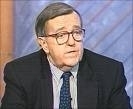
Political columnist and national TV commentator Mark Shields was in Rhode Island last week to speak to members of the Rhode Island Society of Financial Service Professionals during the organization’s professional day program.
The 18th annual program was intended, in part, to raise the awareness of importance of financial planners obtaining certifications that, in this time of volatility in the financial markets, emphasize knowledge and ethical practices.
Shields, a columnist for The Washington Post and a contributor to PBS’ “The NewsHour with Jim Lehrer,” answered a few questions about what’s happening in Washington as it pertains to the financial sector.
PBN: What’s your opinion on how the Obama administration has handled the ongoing problems in the financial sector so far?
SHIELDS: I think we’re a long way from a final judgment on it. I think most voters are giving [President Barack Obama] the benefit of the doubt. More than any president in the last half century, voters identify Obama doing well with the country doing well. So there’s a rooting interest. Most people are suspending critical judgment because it’s so complex.
I don’t think there’s any question that you could make the case that the financial meltdown has been stopped. But by transferring the risk from the investors and the institutions themselves to the taxpayers, it’s an enormous public debt that has been taken on.
Seifert Systems Invests in Energy Efficiency to Strengthen Operations
For manufacturers, energy is more than just another operating expense. It plays a critical role…
Learn More
PBN: What did the administration’s stress test of big banks accomplish? Did they take it easy on the banks?
SHIELDS: I thought if the stress-test approach had been used when I was an undergraduate, I would have been valedictorian. The tester in this case – the Federal Reserve, the administration – they were as interested in the exam going well and banks getting a better grade as the people taking the test. You barter with Citi whether they need $35 billion or $5.5 billion – you negotiate it down. As a layman, which is what I am, there’s a certain skepticism: they went in there, they were going to get a good result, they were going to get positive marks and they came out of it with positive marks. It was cause for skepticism.
PBN: Treasury Secretary Timothy Geithner last week laid out plans to seek new authority over derivatives. More regulation in the finance and insurance industries is a certainty now. How stringent will Washington allow it to get?
SHIELDS: I think there’s an appetite for regulation now that hasn’t been there in the past. … I think that the debate within the administration and outside the administration is how tight are they going to regulate. I think there’s been skepticism, doubt as to whether Geithner had an appetite for regulation of the financial community from which he came. The jury is out on him. He sure had an awful start.
PBN: There are new plans for the Treasury Department plans to raise $58 billion in taxes over the next 10 years through taxes on securities dealers, life insurance products and large estates. The proposal has been opposed by insurers and others, who say it’s the wrong time to make it more expensive for people to obtain “security and peace of mind.” What’s your take on the idea?
SHIELDS: With a $1.75 trillion budget deficit this year … I think Obama has a chance to be the most fiscally responsible president the country’s ever had. There will be an overwhelming consensus that this indebtedness of the country is out of control, that we have to take control. The tax laws will be rewritten. There is no way you can spend 23 percent of the nation’s gross domestic product and collect 17 percent of it. …
The piecemeal parts now [such as the $58 billion tax proposal] , those are small skirmishes. The big battle will be rewriting the tax code, and I think by the end of this year, they will come up with a plan. I don’t know what it’ll be, but it’s got to produce more revenue.
PBN: When consumers think of investment right now, they think of Bernie Madoff, market volatility and risk, but those in life insurance industry say they are not in that business. They say they offer guarantees, fixed rates of return, a safe place for people to put their money for retirement. Is that difference under consideration in Washington?
SHIELDS: I’m not sure it is. The problem with any debate is who becomes the face of it. The face [for the financial sector] is Madoff, the face is AIG. The willingness for people to make that case in Congress to say “Let me stand up for the investment community right now” is not there. … I’m not saying it will be permanent. But the Madoff thing was so big.