
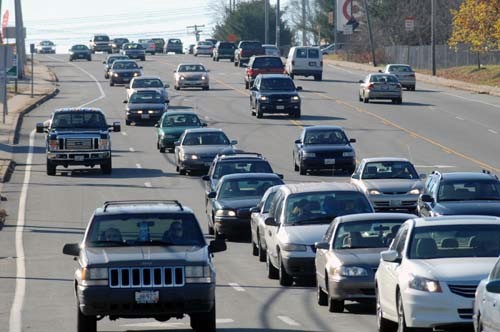
PROVIDENCE – The much-maligned state car tax is on track to disappear within a matter of weeks as part of a set of state tax relief programs unveiled by lawmakers on Thursday.
The sweeping array of relief programs aim to take advantage of the state’s ample cash flow, which includes a nearly $900 million anticipated budget surplus as well as a windfall of federal stimulus aid. The proposals were included in a $13.6 billion fiscal 2023 spending plan approved by the House Committee on Finance Thursday night.
Selling Luxury Real Estate Requires More Than Exposure
By Emilio DiSpirito IV License Partner | Private Office Advisor Engel & Völkers Oceanside www.DiSpiritoteam.com…
Learn More
The “targeted” tax relief outlined in a media briefing at the Rhode Island Statehouse offers savings to what lawmakers said are the most hard-hit communities: low-income households, families with children, seniors and small businesses.
Perhaps the most sweeping of these changes is the early end to the car tax, which if approved, would benefit nearly half a million Rhode Island vehicle owners. Eliminating the car tax has been a gradual process, with incremental cuts beginning in 2017 and originally slated to continue at a reduced rate for one more year. Ending that tax early requires another $62 million in state spending to reimburse cities and towns for that lost revenue.
McKee touted the death of the unpopular tax as a key distinction between Rhode Island and its neighboring states that helps make the Ocean State more attractive to residents and business owners.
The one exception: East Providence residents, who are on a different tax year than the rest of the cities and towns and will not see relief on their car taxes quite as soon.
Other tax breaks aimed at keeping Rhode Island competitive include adding $100 million to build back the dwindling state unemployment insurance trust fund – rather than raising unemployment taxes which would have placed additional burdens on hard-hit small businesses.
“We want to restore that cushion to help businesses,” said Senate President Dominick Ruggerio, D-North Providence. “We don’t know what’s coming down the pike tomorrow.”
Families under a certain income limit would also see tax relief thanks to a $250-per-child tax credit (for up to three children) for parents who make less than $100,000, or $190,000 for a two-parent household in 2021.
The $44 million tax program is estimated to benefit about 110,000 Rhode Island families, McKee said.
Meanwhile, a $4 million boost to the state’s “circuit breaker” property tax increases the amount of tax credits and raises the income eligibility threshold for senior and disabled residents, while additional income tax exemptions will help out military retirees.
The state will also pick up the tab for drivers to get the new version of the “wave” license plate – an $8 per person, one-time cost.
Despite discussion of using the state’s windfall of cash to lower the state’s sales tax, that is not being proposed for the fiscal 2023 budget. McKee said it was “not the right moment,” but that he was open to revisiting it in the future.
House Speaker K. Joseph Shekarchi, D-Warwick, later provided further explanation.
“The money we have is a one-time thing,” he said. “We don’t want to lower the tax and then have to raise it back next year.”
Lawmakers also appeared uninterested in reducing or temporarily suspending the gas tax, with McKee pointing out that the policy as enacted in other states has not eased the price at the pump as much as expected.
(SUBS 2nd paragraph with House committee vote.)
Nancy Lavin is a PBN staff writer. Contact her at Lavin@PBN.com.












If you believe, as I do, that carbon emissions lead to global warming, why would you decrease the car tax unless you are willing to destroy our environment for votes.
Time to vote these two faced clowns out of office.