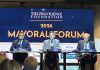
“I believe that Providence will become recognized as a center of arts, arts training and the creation of new and experimental work”
And so a few weeks ago, at a Providence Business News/WSBE TV Summit and live broadcast on developing a business vision, Oskar Eustis, the Trinity Repertory Company artistic director, articulated a vision that was awaiting its official debut.
Beyond Cash Donations: How New Forms of Giving Are Transforming Not-for-Profit Accounting
Evolving Funding Landscape for Not-for-Profits Not-for-profit organizations are being asked to do more with less,…
Learn More
Only a couple of weeks later, Eustis and officials at Brown University announced the formation of a consortium between Brown and Trinity to offer new master’s and doctoral programs in theater arts. It is a consortium that officials suggest may expand to include Rhode Island College and Rhode Island School of Design. And it is one that Eustis and others say will rival, if not exceed, the program at Yale University.
Trinity’s Conservatory will be incorporated in the new program, and Eustis, a visiting professor at Brown now, becomes a full professor, directing the new consortium and overseeing its Master in Fine Arts program.
Arnold B. Chace, Jr., Trinity’s board chairman, suggested that the “rare confluence of theatrical artistry and academic expertise” involving “two of the brightest crown jewels in our Renaissance city” will gain Providence even greater “international acclaim.”
We believe this is an enormously important development for Providence and Rhode Island — the establishment of what will become one of the premier programs of its kind in the country, drawing greater attention to a city and state whose arts community on all levels is playing a more significant role in economic development. We need to look no further than to realize that tourism in Rhode Island now exceeds $3 billion a year and is the state’s second leading industry.
We also believe this again signals how critical collaborations become among the academic world and public and private sectors. Brown not long ago announced it was building a state of the art science building that would fuel our biotechnology industry, bringing to the state some of the leading students and educators in biotech. The result that often follows such developments is an influx of talented individuals into the local workforce, and the development of new businesses.
The Slater Centers are a growing and important example of a positive collaborative between our universities and government, ultimately leading to the development of private sector businesses.
And this newest collaboration between Brown and Trinity is yet another example of how important these partnerships have become as our economy continues to shift from a traditional manufacturing base to a service- and knowledge-linked economy.