Nonprofit aims to create 106 homes, a new mood
A century ago, the Victorian houses on Parkis Avenue in Providence’s Elmwood neighborhood were considered among the city’s grandest. But a lot has changed since then; the houses have fallen into disrepair, as the residents have grown indifferent to their environment.
Beyond Cash Donations: How New Forms of Giving Are Transforming Not-for-Profit Accounting
Evolving Funding Landscape for Not-for-Profits Not-for-profit organizations are being asked to do more with less,…
Learn More
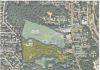
Greater Elmwood Neighborhood Services has set out to reverse the trend, with a three-phase redevelopment project that aims to revitalize what Executive Director Cynthia Langlykke described as one of the city’s “most blighted” areas.
The project will include a mix of new construction and rehabilitation of historic structures, with the goal of creating rental and ownership property for residents of mixed incomes. Altogether, 12 historic multifamily dwellings and two carriage houses will be restored; a 13th historic property will be reconstructed; and three new homes will be built on vacant lots.
Founded in 1978, as Elmwood Neighborhood Housing Services, Greater Elmwood is a nonprofit focused on rebuilding and revitalizing neighborhoods through real estate investment, housing rehabilitation and economic development.
The group’s $5.9 million redevelopment two years ago of several houses and the former Melrose Apartments, on Adelaide Avenue, into 47 rental and homeownership units, won multiple awards for its approach to housing development, architecture and historic preservation.
The Parkis Avenue project, which will rebuild an entire city block, is even more ambitious.
The $4.5 million first phase, which will produce 16 condominiums, is already under way, Langlykke said, with units slated to be coming online throughout 2007.
The units will be priced between $90,000 and $190,000, she said, so they’ll accessible to people of different incomes, starting as low as about half the state’s median household income. (This year’s median household income in Rhode Island is $64,550, according to the U.S. Department of Housing and Urban Development.)
Bringing together residents at different income levels is a key goal, Langlykke said.
“Most people would agree that it makes for a healthier neighborhood,” she explained. “We’re thinking that, with a mix of incomes, it will be a more diverse environment economically that will help promote relationships between the lower-income folks and the higher-income folks.”
Next year also will mark the beginning of the project’s second phase, expected to cost Greater Elmwood about $7.5 million. That part of the project will produce 40 units of affordable rental housing, aimed at people making 40 to 60 percent of the state’s median household income.
The third phase, which is slated to be completed in 2009, will produce another 50 units of rental housing, through historic rehabilitation.
Michael Lozano, development director at Greater Elmwood, said that phase of the project is still being planned, with specifics such as price points still being determined. But he added that the third phase is expected to require less work than the first two, because those buildings are in better shape than the ones being restored now.
The Parkis Avenue area is one of Providence’s most dilapidated, with a median household income of $22,816 in 2000 and a high crime rate.
“By investing in this specific block, it could lead to a real high-impact change for the neighborhood and provide much, much better housing for residents,” Langlykke said.
The hope is that, by 2009, the development will have helped produce a greater sense of community among neighborhood residents, leading to greater mutual respect and more activity in the area, which hopefully will spill over onto adjacent streets.
Greater Elmwood is already working on changing the neighborhood’s tone.
This fall, for example, the group held a cookout to which it invited members of the Providence police as well as local residents. In terms of trust-building, Langlykke said, the event felt like a “real breakthrough.”
“It’s something we’re working on, step by step,” she said. “But I do think we’re seeing some progress here.”